General
Is Your Email Security Strong Enough? Tips for Secure Communication
Today, 94% of cyberattacks are delivered by email. Every day, millions of personal and corporate records are put at risk by insecure email communication.
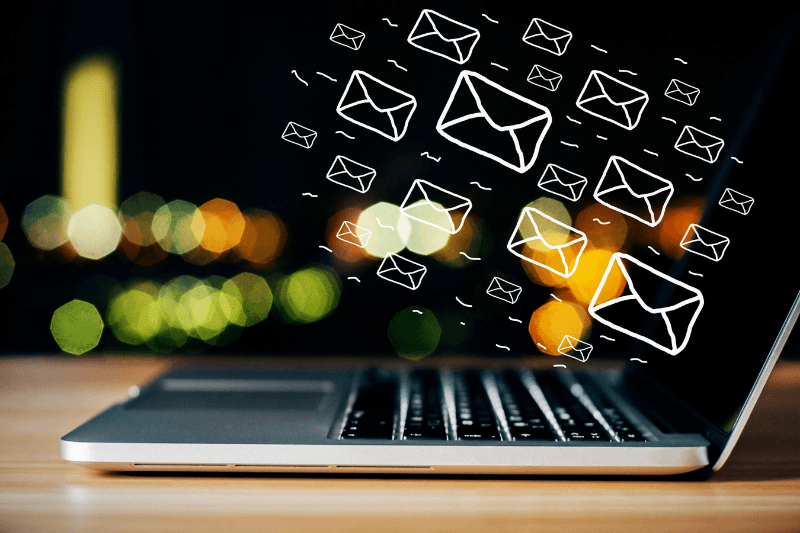
Today, 94% of cyberattacks are delivered by email . Every day, millions of personal and corporate records are put at risk by insecure email communication. Email security has become an essential part of both our personal and professional lives.
Taking the right steps in corporate email security is vital for a company's future. In this article, you will find comprehensive answers to the question of how to secure email. We share everything you need to know, from KVKK (Turkey's Personal Data Protection Law) compliance and international standards to security solutions and emergency plans.
Legal Responsibilities in Email Security
Legal regulations on email security clearly define the responsibilities of organizations and individuals. In this section, we explain the basic legal requirements and obligations in detail.
KVKK Compliance Requirements
The right to the protection of personal datais one of the fundamental human rights and freedoms. Under KVKK, we must meet the following core requirements to secure personal data transmitted by email:
- Taking technical and administrative measures for data security
- Informing employees about personal data
- Defining data processing policies transparently
- Establishing data retention and destruction procedures
International Data Protection Standards
The ISO 27001 standard is an important reference point for corporate email security. It helps organizations keep their own and their customers' confidential information secure and managed. The system allows us to protect all financial and confidential information more effectively and to minimize the possibility of unauthorized access.
Legal Obligations and Penalties
Failure to comply with KVKK can lead to serious sanctions. Key penalties include:
- Unlawful processing of personal data: 1 to 3 years' imprisonment
- Unlawful data transfer: 2 to 4 years' imprisonment
- Failure to meet the obligation to inform: an administrative fine of 5,000 to 100,000 TL
- Failure to meet data security obligations: an administrative fine of 15,000 to 1,000,000 TL
In corporate email security, employers have specific responsibilities to protect their employees' personal data. Employers must respect employees' fundamental rights and freedoms when they monitor email.
Corporate Email Security Solutions
Choosing and implementing the right solutions is critical to success in corporate email security. More than 333 billion emails are sent and received worldwide every day, and employees receive an average of 120 emails a day. Three core solutions stand out for securing this heavy traffic.
Email Gateway Security
Email gateway solutions form the first line of defense for corporate communication. These systems analyze emails before they reach the recipient and block those that contain threats. Research shows that 70% of successful data breaches originate from endpoint devices . Gateway security minimizes these risks by detecting and blocking threats such as phishing, malware and ransomware.
Cloud-Based Email Protection
Cloud-based email security solutions reduce operating costs and simplify maintenance and operating procedures. These systems offer:
- Real-time threat analysis
- Automatically updated protection mechanisms
- Advanced spam filtering
- Data loss prevention (DLP) features
Today, when most cyberattacks (94%) start with a malicious email, cloud-based solutions provide 24/7 protection.
Endpoint Security Solutions
Endpoint security is critical, especially now that remote work has become widespread. These solutions protect all endpoints, such as desktops, laptops and mobile devices. Systems supported by AI and machine learning can quickly detect and block previously unknown threats.
Modern email security solutions come with advanced features such as sandboxing and real-time URL analysis. These systems share threat intelligence between security layers and make it possible to respond quickly to emerging attacks.
Security Breach Response Plan
As cybersecurity specialists, we know that a fast and effective response is vital when a security breach occurs. According to FBI data, the cost of cybercrime in 2020 exceeded 4.1 billion dollars .
Breach Detection Mechanisms
The core mechanisms we use to detect email security breaches early are:
- Real-time activity monitoring systems
- Suspicious sign-in alerts
- Automated threat intelligence
- User behavior analysis
- Data flow anomaly detection
Emergency Response Procedures
Steps to follow when a security breach is detected:
- Notifying the Personal Data Protection Board within 72 hours of detecting the breach
- Isolating the affected systems
- Suspending suspicious accounts
- Changing all user passwords
- Activating the incident response team
Data Recovery Strategies
Early intervention is critical in data recovery. Professional data recovery specialists use specialized hardware and software tools to recover data. The first step in this process is to check whether the lost files were previously backed up.
In our data recovery strategies, we define Recovery Time Objectives (RTO). We follow an approach that prioritizes the recovery of critical data. Because we test our recovery plans regularly, we can identify potential problems in advance and take precautions.
For successful recovery after an email security breach, we focus on the following points:
- Correctly identifying the cause of data loss
- Using professional recovery tools
- Checking the integrity of recovered data
- Taking measures to prevent future breaches
Our incident response teams (IRT) set proactive rules against potential risks and classify incidents by priority. This approach allows us to continuously strengthen our corporate email security.
The Future of Email Security
Artificial intelligence (AI) and machine learning technologies are bringing revolutionary changes to email security. In an age of information overload, daily email management is becoming more and more complex, and for us as security specialists, AI-supported solutions are now a necessity rather than an option.
AI and Machine Learning Integration
AI-supported email security systems are highly successful at detecting and preventing advanced threats. These systems continuously analyze email traffic and user behavior to block phishing, malware and ransomware attacks.
The intelligent email security solutions we use today have the following capabilities:
- Real-time threat detection and prevention
- User behavior analysis and anomaly detection
- Automated security incident response
- Data protection and privacy compliance checks
In the future, in addition to ransomware and phishing attacks, we will see more sophisticated attacks that misuse AI technologies. For this reason, we continuously update our security strategies and take a proactive approach.
One of the most important email security trends in 2024 will be the wider use of AI and machine learning. These technologies learn from large datasets and allow us to develop smarter filtering systems. Deep learning methods in particular stand out for their high performance in spam detection and can reach accuracy rates above 94% .
Synchron and Corporate Email Security
Email security has become an essential part of corporate life. In this article, we presented a comprehensive roadmap, from KVKK compliance and international standards to gateway solutions and endpoint security. We emphasized the importance of being prepared for security breaches and covered the critical role of emergency response plans and data recovery strategies. The transformation that AI and machine learning technologies bring to email security allows us to build stronger defense mechanisms against the threats that lie ahead.
Securing corporate email requires:
- Full compliance with legal regulations
- The use of up-to-date security solutions
- Proactive threat prevention systems
- Regular staff training.
Because cyber threats evolve continuously, we must regularly review and update our email security strategies. As Synchron, our corporate email security solutions help your business comply with KVKK and international standards. We keep your data secure with AI-supported gateway solutions, endpoint protection systems and advanced threat detection methods.
To ensure full security and compliance in your business processes, contact us and explore email security solutions tailored to your needs.
Frequently asked questions
How can I keep my email secure?
Measures you can take to keep your email secure include: - Use corporate email only on secure devices. - Create strong passwords and change them regularly. - Avoid using the same password for more than one account. - Enable multi-factor authentication. - Take care not to open suspicious emails.
What are the email-borne security threats?
Email-borne security threats generally fall into three main categories: - Malware distribution. - Phishing. - Domain spoofing.
Is it safe to send sensitive information by email?
Email is not a secure way to send sensitive information such as passwords, credit card numbers or bank account details. If you need to send confidential information, we recommend that you use an encrypted email service or a secure messaging application.
About the author
Synchron