

Cyber Security
Data Loss Prevention (DLP) Management
We design, deploy and operate DLP policies that control how sensitive data leaves your organization. We monitor and report DLP events.
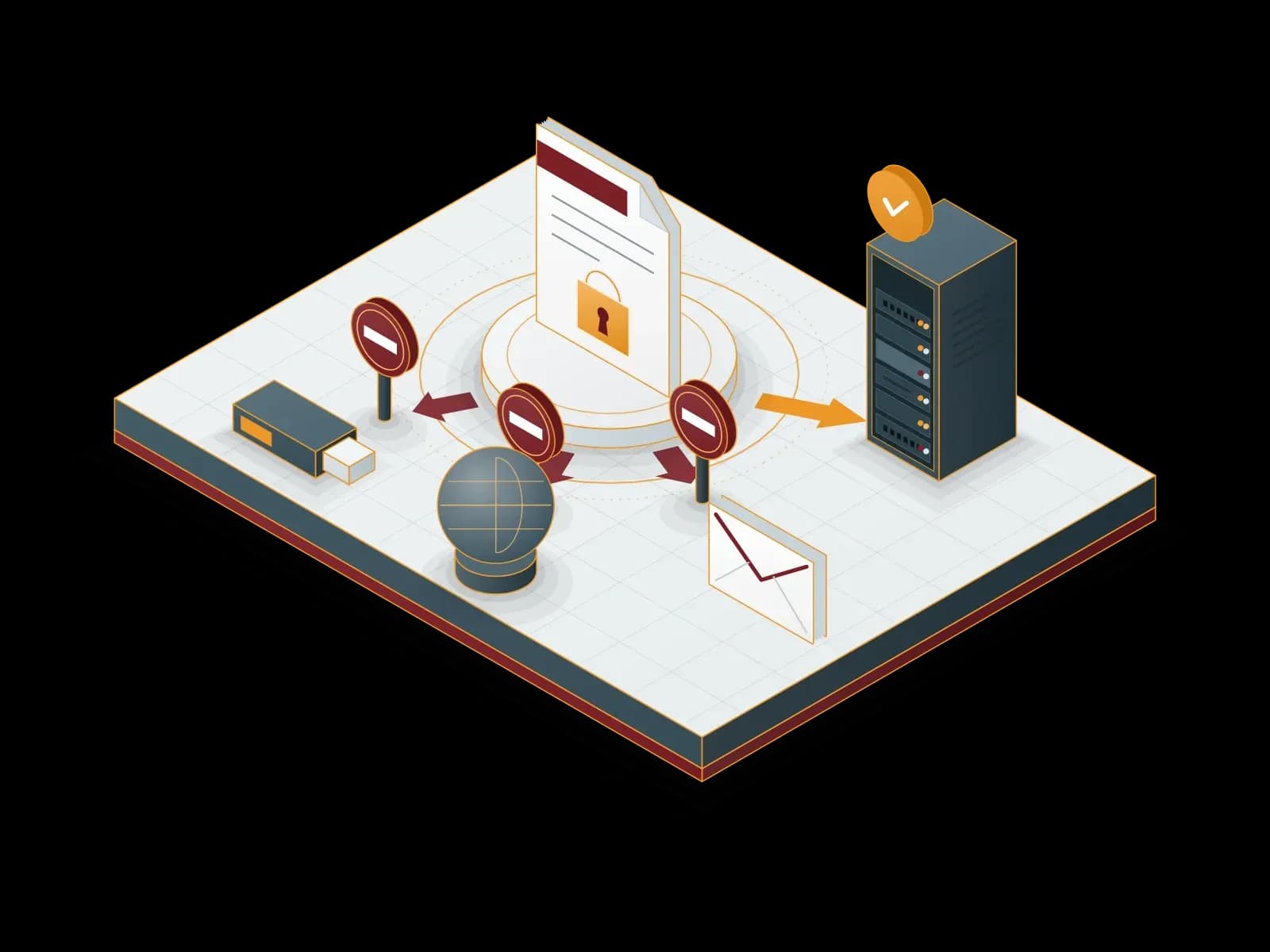
Benefits of DLP Management
Sensitive Data Protection
We define sensitive data types such as personal data, financial data and source code and block their transfer over unauthorized channels.
Event Monitoring
We monitor DLP events in the console. We examine each transfer that a policy stops and share it with you.
Regulatory Support
DLP records are evidence of the technical measures under KVKK. Compliance also needs administrative measures.
User Awareness
We set policies to show a notice to the user. The user sees why an action was blocked.
Staged Rollout
We first run policies in monitoring mode, review the results and then switch them to blocking mode.
Reporting
We report blocked transfers, risky user behaviour and policy changes on a regular basis.
Data Discovery
We scan computers and removable media for sensitive data and plan actions for the files we find.
24/7 Technical Support
Our support line is available 24/7. We prioritize requests by business impact.


Which data channels does DLP control?
DLP controls every channel through which sensitive data can leave the organization. Endpoint DLP solutions apply this control on the user’s computer. Typical channels are:
- Removable media: USB drives, external disks and phones connected to the computer.
- Web browsers and web-based file sharing services.
- Email clients and instant messaging applications.
- Cloud storage applications.
- Clipboard (copy and paste), screenshots and printers.
For DLP we use Netwrix Endpoint Protector. According to the vendor, the product runs on Windows, macOS and Linux computers. It has four modules: Device Control, Content Aware Protection, eDiscovery (discovery of sensitive data at rest) and Enforced Encryption (mandatory encryption on USB drives).
What are the steps of a DLP project?
We run a DLP project step by step. We first test policies in monitoring mode and then switch them to blocking mode. This method does not interrupt your workflows.
- Data definition: We define the data types to protect together with you. Examples: customer information, financial data, source code and personal data under KVKK.
- Channels and user groups: We define which channel stays open for which user group.
- Monitoring mode: We first run the policies in record-only mode.
- Review: We review the records with you and correct rules that cause false alarms.
- Blocking mode: We switch the approved policies to blocking mode. The user sees the reason for a blocked action in a notification.
- Operation: We monitor DLP events, examine each transfer that a policy stops and report on a regular basis.
Which organizations need DLP?
Every organization that processes personal data, trade secrets or intellectual property reduces the risk of data leaks with DLP. We recommend that you give a DLP project priority in these cases:
- You process customer, patient or employee personal data in bulk.
- Many users have access to finance, accounting or human resources data.
- You have intellectual property such as source code, design files or proposals.
- The use of USB drives and cloud sharing is not controlled in your organization.
- You must give evidence of data transfers in audits.
DLP is one of the technical measures under KVKK. Our articles on this topic: The Critical Role of DLP in KVKK and GDPR Compliance and What is DLP? Ways to Enhance Your Business’s Data Security.
DLP gives stronger results together with endpoint protection and central log monitoring. Related services: Antivirus – Antimalware Management and SIEM – SOC Management.
Our Solution Partners

Frequently asked questions
What Is DLP (Data Loss Prevention) and Why Is It Important for Organizations?
DLP is a security method that detects and blocks sensitive data leaving the organization over unauthorized channels. It reduces the risk of data leaks in organizations that process personal data.
Which Data Does the Synchron Bilişim DLP Management Service Protect?
We define the data types to protect together with you, such as customer information, financial data, intellectual property and personal data under KVKK.
How Do DLP Solutions Help KVKK and Regulatory Compliance?
DLP controls the transfer of personal data and keeps event records. These records are evidence of technical measures. KVKK compliance does not come from a single product; administrative measures are also necessary.
How Does DLP Management Protect Against Insider Threats?
DLP controls intentional or accidental data sharing by users with policies and records each event. We first test policies in monitoring mode and then switch to blocking mode.
Why Choose Synchron Bilişim for DLP Management?
The same team handles the work from policy design to daily event review. Our support line is available 24/7. We use Netwrix Endpoint Protector as the DLP solution.
Related services
SIEM – SOC Management
We collect your system logs in a SIEM platform, monitor security events with our SOC team and pass verified incidents on to you.
Cyber Threat Intelligence (CTI) Management
We monitor threat intelligence sources, extract the indicators (IOCs) that matter to you, feed them into your security systems and send you prioritized alerts and reports.
Antivirus – Antimalware Management
We install antivirus and antimalware software on your computers and servers, manage it from a central console and monitor threat alerts. We work with ESET and Bitdefender products.
Let's discuss your project
Tell us what you need and we will match you with the right team. For urgent issues, call our support line.