Cyber Security
The Critical Role of DLP in KVKK and GDPR Compliance
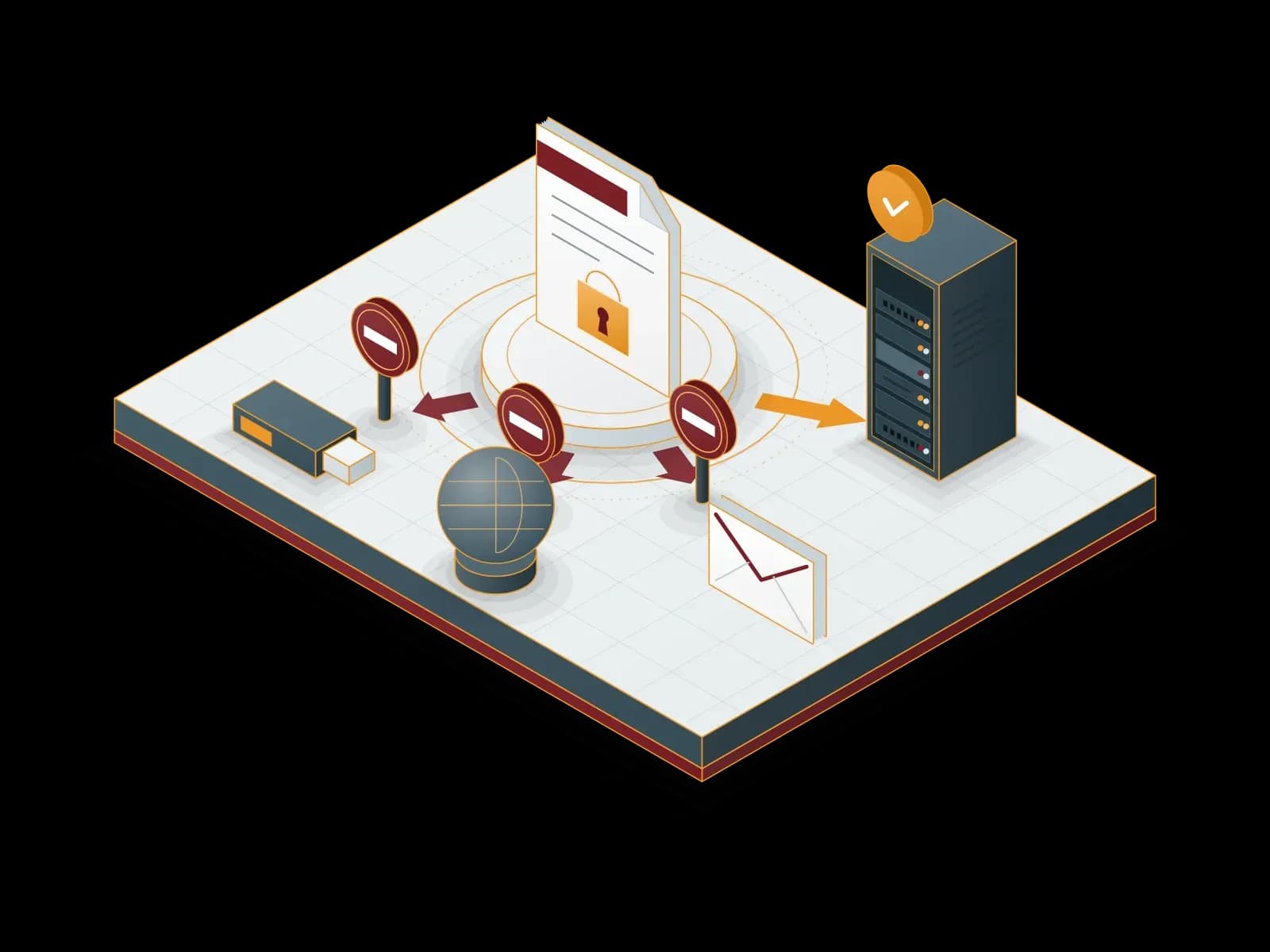
DLP (Data Loss Prevention) helps prevent sensitive data inside an organization from being shared without control, taken outside or reaching the wrong people.
- Author
- Synchron
- Category
- Cyber Security
- Published on
- Updated on
4 min read
Data protection regulations such as KVKK (the Turkish Personal Data Protection Law) and GDPR do not only make organizations responsible for storing personal data; they also directly regulate who accesses that data, how it is processed, under what conditions it is shared and how it is protected. For this reason, compliance is not just about following legal texts. The real issue is being able to manage data securely inside and outside the organization.
Today, in many organizations, personal data is processed in different systems, by different user groups and often on more than one platform. As the flow of data increases across email traffic, file sharing, cloud applications, portable devices and internal systems, so does the risk of sensitive information circulating without control. This is exactly where data security stops being a supporting element of compliance and becomes its central topic.
Even if an organization knows where it keeps its personal data, it is not truly in control if it cannot monitor how that data is used. Likewise, sharing data with the wrong person, exposing it to unauthorized access or leaking it outside the organization is not only a security weakness but also a serious compliance problem. From a KVKK and GDPR perspective, the risk is not only data loss but also a lack of oversight, insufficient traceability and weak preventive mechanisms.
For this reason, organizations should aim not only to "protect data" but to "manage the movement of data". If you do not clearly define which data is sensitive, who can access it, through which channels it can be shared and how risky behavior is detected, compliance stays on paper. Real compliance is only possible with technical controls, visibility and a sustainable approach to data security.
How do DLP solutions protect sensitive data?
DLP, short for Data Loss Prevention, is a critical security layer that helps prevent sensitive data inside an organization from being shared without control, taken outside or reaching the wrong people. Especially with regulations such as KVKK and GDPR, the issue is not only storing data but also monitoring its movement and being able to intervene in risky situations.
Today, personal data is not kept only in databases. It also circulates in emails, file attachments, cloud storage, team collaboration platforms and end-user devices. This means sensitive data can often leave the organization unnoticed. This is where DLP solutions come in: they make visible where data is, how it is used and which movements carry risk.
The key contribution of DLP is not only raising an alert after an incident but blocking the risk before it happens. For example, the system can take a preventive role in scenarios such as an employee sending a file containing personal data to the wrong recipient, customer information being uploaded to an unapproved cloud platform or a sensitive document being taken outside the organization.
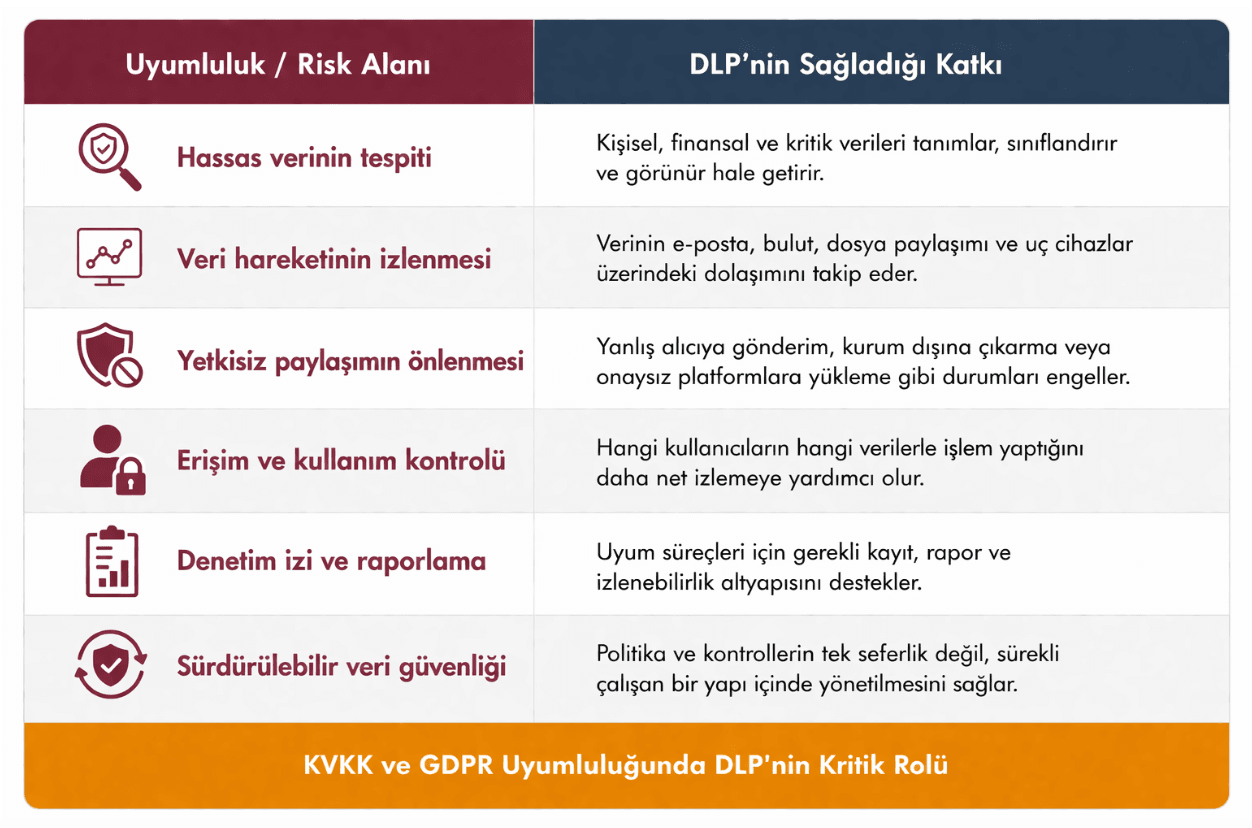
In this respect, DLP is not just a technical security tool; it is also an active part of data governance. It gives organizations an answer not only to "which data is where?" but also to "who is doing what, and is this action risky?" This is exactly what matters for KVKK and GDPR compliance: not just storing data but managing it consciously and under control.
Why are visibility, monitoring and sustainable control essential for compliance?
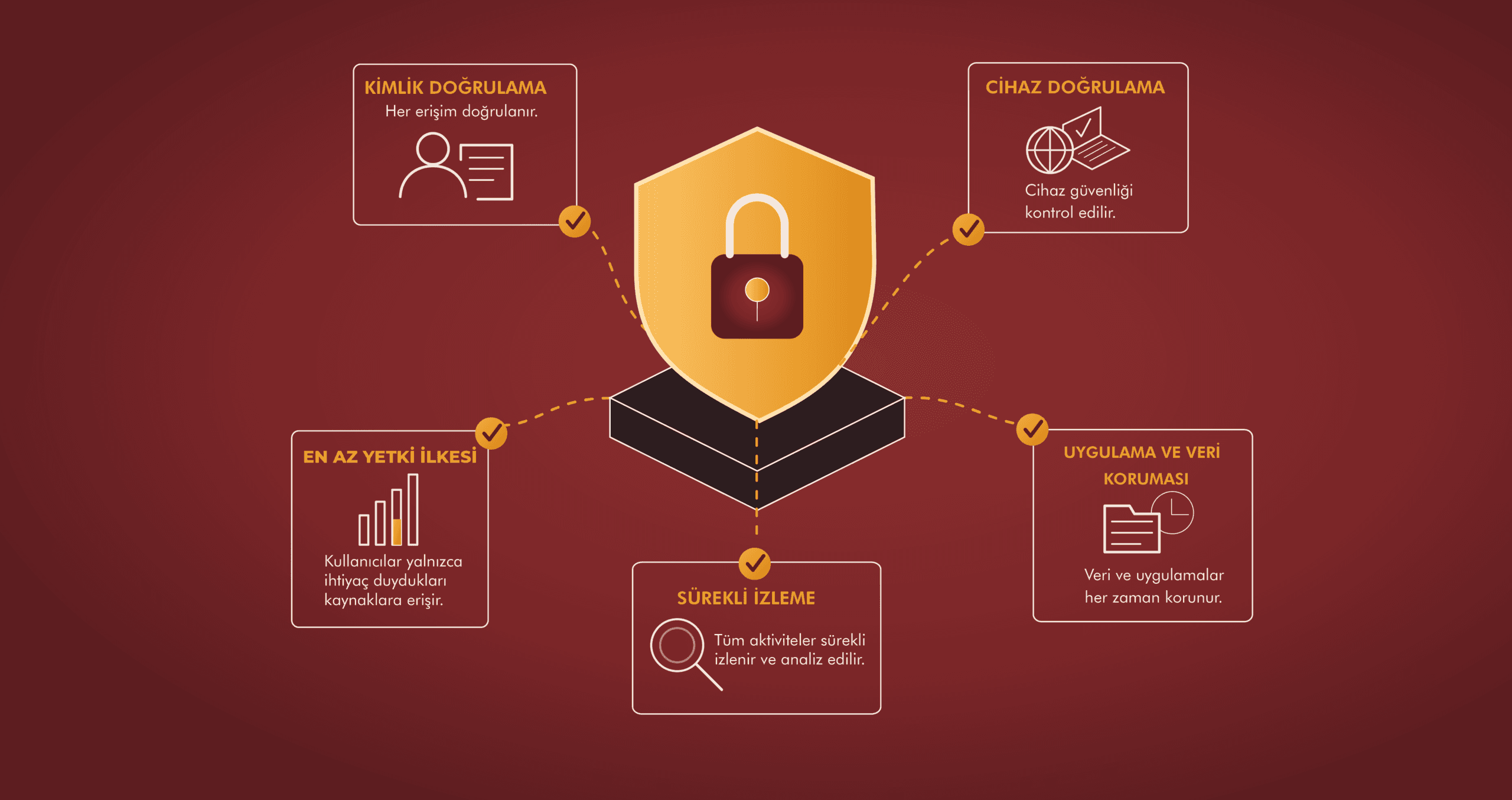
KVKK and GDPR compliance is not achieved simply by putting certain rules in writing. Organizations also need to know where data is, monitor how it is used and respond to risky actions in time. When control over sensitive data is lost, compliance also starts to weaken in practice.
This is where visibility becomes critical. When an organization can clearly see which data sits in which systems and who processes it, it can manage risks more accurately. The monitoring layer makes this visibility meaningful, because knowing that data exists is not enough; you also need to track its movement. In environments where personal data travels through email, cloud applications and file sharing channels in particular, this tracking is a core part of compliance.
Sustainable control keeps this structure in place over time. Security policies, once set up, must be updated over time, adapt to changing user behavior and remain flexible against new risk scenarios. Otherwise, a structure that looks strong at first can quickly lose its effect. For this reason, DLP should be treated not as a one-time measure but as a continuously operating security and governance mechanism.
At Synchron Bilişim, we offer traceable and sustainable DLP solutions that put data security at the center, so organizations can manage their KVKK and GDPR obligations more effectively. This way, organizations not only protect their data but also make their compliance processes more controlled, measurable and sustainable. For detailed information, contact us.
About the author
Synchron