Cloud Technologies
RAM Crisis Analysis from Synchron Bilişim (2026)
The most critical aspect of the RAM crisis is how widely its impact spreads, because very different markets now share the same memory ecosystem and supply chain.
- Author
- Synchron
- Category
- Cloud Technologies
- Published on
- Updated on
5 min read
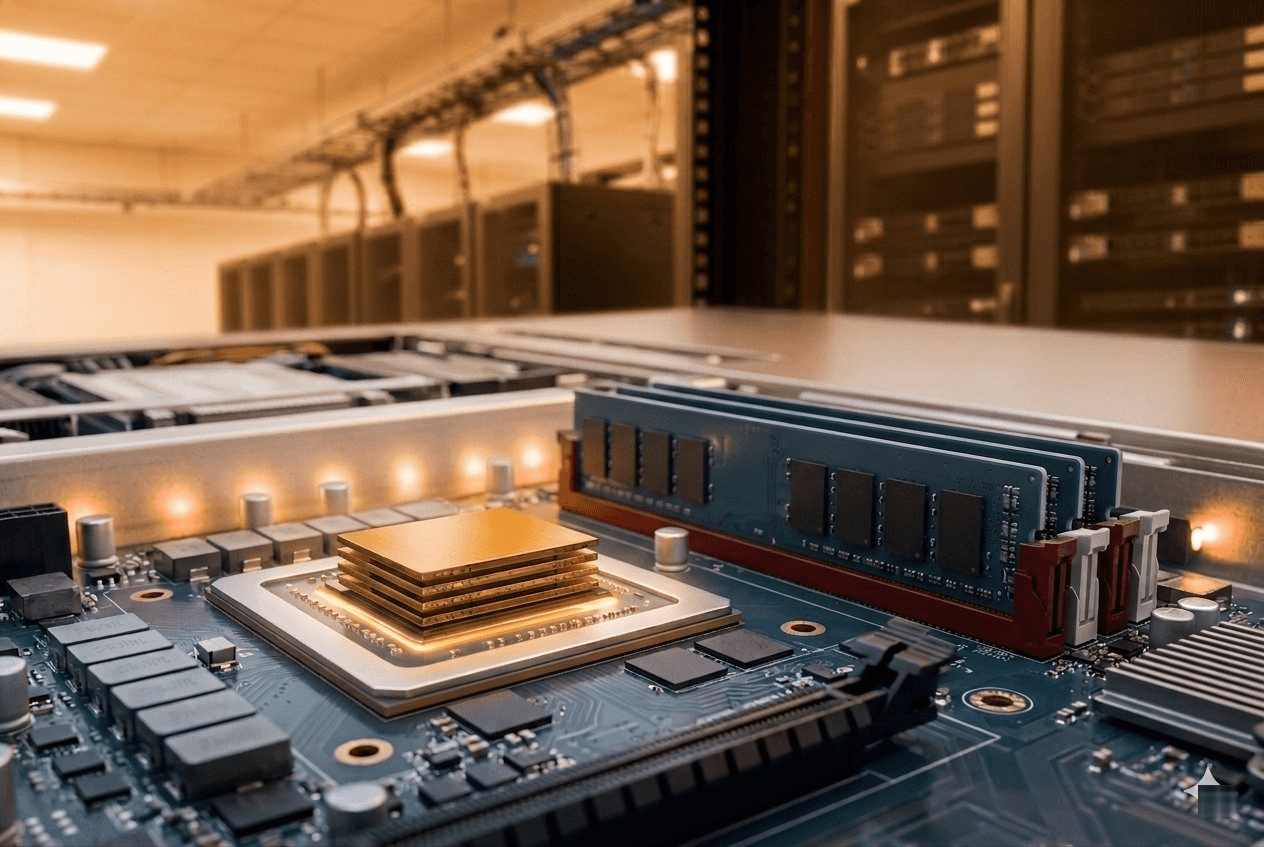
AI investment, which accelerated throughout 2025, has clearly shifted the balance in the memory market. Rising demand for HBM (High Bandwidth Memory ) in AI data centers in particular has tightened supply on the standard DRAM side and increased price pressure. As a result, rising RAM prices now affect not only individual PC users but a much wider technology ecosystem, from server infrastructure to mobile devices.
In this blog post, we look at the causes of the AI-driven memory crisis, who it affects and how it may develop in the coming period.
The Root of the Crisis: Tension Between DRAM and HBM
DRAM technology is at the center of the memory crisis. Many systems, from smartphones to laptops and from servers to countless electronic devices, run on these memory chips. In recent years, however, a new player with much stronger demand has entered the scene: HBM (High Bandwidth Memory ).
As AI data centers grow rapidly, demand for the HBM needed by AI processors, especially those used by companies such as NVIDIA, AMD and Google, has risen sharply. This is where the problem starts: HBM production consumes much more manufacturing capacity and wafers than standard DRAM.
This has led manufacturers to shift their resources to the more profitable HBM side. As a result, standard DRAM supply has tightened, price pressure has increased, and this pressure has not stayed limited to the server market.
Why Does HBM Matter So Much?
HBM differs structurally from traditional memory chips. It offers three advantages at once that are especially critical for AI workloads:
- Much higher bandwidth: It makes it possible to process large data sets much faster.
- An architecture suited to AI workloads: It delivers higher efficiency than standard DRAM in tasks that require parallel computing.
- Higher profit margins for manufacturers: This encourages production capacity to shift to HBM.
Samsung, SK hynix and Micron (the three manufacturers that control most of the global DRAM market) are directing more and more of their capacity to HBM production. This strategic shift makes commercial sense, but its effects are passed directly to the consumer market.
Why Are Data Centers Not the Only Ones Affected?
The most critical aspect of the RAM crisis is how widely its impact spreads. Today, very different markets share the same memory ecosystem:
- AI data centers and cloud infrastructure
- Enterprise servers
- Smartphones
- Gaming PCs and laptops
- Automotive electronics and embedded systems
Strong enterprise demand from AI and cloud creates price pressure on all these product groups, which use the same supply chain. In other words, part of the cost of data center investment is passed on to end users who buy a laptop or a smartphone.
How Does It Differ from the GPU Crises?
For those who remember past GPU crises, this picture may look familiar at first glance. However, the current RAM crisis differs structurally from earlier graphics card bottlenecks:
Past GPU Crises | 2025 RAM Crisis |
|---|---|
Crypto mining and the pandemic | AI data centers and cloud investments |
Consumer-driven demand | Mainly enterprise demand |
A specific product category | All categories that use RAM |
Impact comparison: Synchron Bilişim RAM Crisis Analysis (2026)
Why Could the Crisis Last Longer?
Manufacturers are cautious about new capacity investments. This is not irrational: new fabs require billions of dollars of capital, and bringing additional production capacity online can take years. So what does the demand side look like?
- AI demand remains strong.
- HBM continues to offer higher profitability than standard DRAM.
- Even in the most optimistic scenario, new production capacity can take 2-3 years to come online.
As long as demand stays strong, it seems unlikely that the pressure on RAM prices will disappear completely in the short term. This points to a medium-term cost reality for both consumers and enterprise buyers.
What Can Consumers Do?
In this environment, you need to plan purchase decisions more carefully. Some practical options:
- If there is no urgent need, consider postponing a standalone RAM upgrade. Prices are not expected to fall back completely, but short-term fluctuations can create buying opportunities.
- If you plan to buy a new system, watch for promotions and deals before major price increases are fully passed on.
- Depending on your performance needs, consider DDR4 alternatives instead of DDR5.
- Second-hand memory modules or optimizations to use your existing RAM capacity more efficiently are also options.
A Temporary Rise in RAM Prices or a Structural Shift?
The RAM crisis is likely to be more than a temporary price increase. Considering the reshaping of the memory ecosystem, the shift of production priorities to AI-focused areas, the structural change in the supply chain and the growing influence of enterprise demand on pricing, some aspects of this crisis may become permanent.
As AI moves out of data centers into every area of daily life, the economics of memory technology are also changing fundamentally. This picture should be read not just as a hardware development but as part of a larger change that shows the digital economy being restructured.
About the author
Synchron