Managed Services
What Is SD-WAN and When Should You Use It?
As business networks grow more complex, companies need secure, uninterrupted connectivity between teams working at remote sites, in the cloud and on the move.
- Author
- Synchron
- Category
- Managed Services
- Published on
- Updated on
6 min read
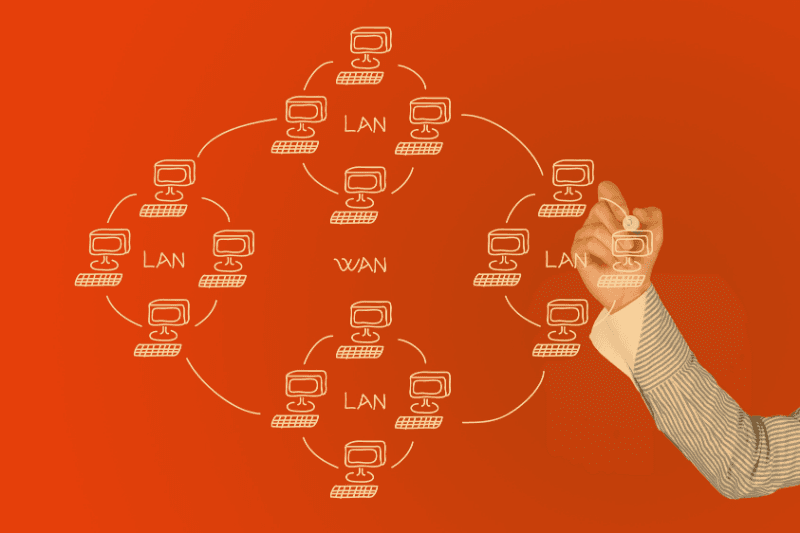
As communication networks in the business world grow more complex every day, companies increasingly need uninterrupted and secure connectivity between teams working at distant locations, in the cloud or on the move. Traditional WAN (Wide Area Network) solutions served companies well for many years. However, their dependence on expensive MPLS lines and their lack of flexibility now make it hard for them to meet the needs of many organizations.
This is where SD-WAN (Software-Defined Wide Area Network) technology comes in. It lets you manage wide area networks in a much more flexible, software-based and centralized way. With this approach, you can combine different connection types such as internet, LTE and MPLS, while traffic flows are optimized in real time. In other words, SD-WAN is not just a connectivity technology; it is also a strategic infrastructure that supports a company's digitalization journey.
Factors such as growing data traffic, the shift to cloud applications and hybrid working models have made SD-WAN a priority for many organizations. This article explains what SD-WAN is, how it works, in which scenarios it is preferred and what advantages it offers. The goal is to give decision-makers who are considering this technology a simple, practical framework.
What Is SD-WAN and How Does It Work?
SD-WAN stands for Software-Defined Wide Area Network. This technology aims to manage wide area networks that connect multiple locations in a more flexible, centralized and software-controlled way. Unlike traditional WAN solutions, SD-WAN goes beyond the limits of physical hardware and moves network managementto the software layer. This allows organizations to use different connection types (for example broadband internet, 4G/5G and MPLS) at the same time and to route traffic dynamically by application type, user or link quality.
One of the core building blocks of SD-WAN is its centralized control mechanism. With this control plane, network administrators can monitor network traffic, define policies and quickly apply changes to all endpoints from a single interface. For example, routing a critical application (such as video meeting software) over a low-latency link takes only a few clicks.
Another important feature is application awareness. SD-WAN lets you analyze traffic not only by source and destination but also by application type. This way, network resources are allocated more intelligently: priority applications get more bandwidth, while low-priority traffic can be limited.
Finally, SD-WAN systems usually come with end-to-end encryption, advanced firewalls and traffic monitoring tools . As a result, you get both performance and security under one roof.
When Is SD-WAN the Right Choice?
SD-WAN is a strategic solution, especially for organizations that face specific operational challenges. One of the main reasons to adopt it is the need to manage multiple locations and to build a high-performance network between headquarters and branches. Traditional WAN solutions require connecting each branch to the head office over MPLS, while SD-WAN does the same over internet-based links at lower cost and with greater flexibility.
For example, retail chains or banks with branches in many cities can manage all their locations centrally with SD-WAN. You can see in real time how much each application uses at each branch and redefine traffic priorities when needed. This provides operational agility.
In addition, companies that rely heavily on cloud-based applications also benefit significantly from SD-WAN. Office 365, Salesforce, Zoom and similar SaaS (Software as a Service) applications connect directly to the internet, so in classic WAN models they can overload central network points. SD-WAN improves performance by sending this traffic directly to the most suitable exit point.
Hybrid and remote working models are another factor driving the need for SD-WAN. After the pandemic, many companies required their employees to access systems securely and quickly from outside the office. SD-WAN can provide this access in an integrated way, with encrypted connections and security policies.
In short, SD-WAN is an ideal solution for:
- Multi-location organizations
- Organizations that rely mainly on cloud applications
- Organizations that want to actively use broadband internet connections
- Companies that need a secure, centrally managed network infrastructure
- Businesses that operate with hybrid or fully remote teams
Advantages and Disadvantages of SD-WAN
Like every new technology, SD-WAN offers a number of advantages but also brings limitations and points to watch. Moving to SD-WAN is a strategic decision for an organization, so evaluate it in both technical and operational terms.
Advantages:
- Cost Savings:
SD-WAN lets you use more affordable broadband internet lines as an alternative to expensive MPLS connections. This is a significant cost advantage, especially for multi-location organizations. [Source: Gartner, 2023 SD-WAN Market Guide
] - High Performance and Dynamic Traffic Management:
Because SD-WAN can route traffic by application type, it delivers high quality for performance-sensitive services such as video conferencing, VoIP or cloud-based business applications. When the network is congested, it can automatically route traffic to alternative links. - Centralized Management and Visibility:
Monitoring the whole network and defining policies from a single management panel makes the work of IT teams much easier. Branch-level issues can also be detected and resolved much faster. - Advanced Security:
Many SD-WAN solutions include security features such as an integrated firewall, traffic encryption (IPsec VPN), malware detection and user access controls. This makes the network both flexible and secure.
Disadvantages and Challenges:
- Migration and Adaptation:
Moving to SD-WAN requires a learning and adaptation period, especially for organizations with traditional infrastructure. In some projects, IT teams need time and resources to learn the new technology. - Upfront Costs:
Although it provides cost advantages in the long term, items such as licensing, hardware and consulting can require a short-term investment at the start. - Excess Capacity for Small Organizations:
For businesses with a single site or limited internet traffic, SD-WAN can be an unnecessary investment. For this reason, analyze the organization's size and needs correctly.
SD-WAN is a modern technology that combines flexibility, efficiency and security in enterprise network infrastructure. It simplifies centralized management for multi-location businesses and provides direct, optimized access to cloud-based applications, which makes it a strong alternative to traditional WAN solutions. Given current business needs such as growing data traffic, remote work and digital services, SD-WAN is now seen not as a "luxury" but as a "necessity" for many organizations.
However, as with every technology solution, how well SD-WAN fits depends on the organization's needs analysis and existing infrastructure. Before investing in SD-WAN, evaluate factors such as network traffic, application usage and security requirements in detail. Other solutions can be a better fit, especially for small or static businesses.
Is Your Organization Ready for SD-WAN?
A professional assessment is the best way to answer this question clearly. To analyze your network and see what advantages a move to SD-WAN would bring you, contact us.
About the author
Synchron