Cloud Technologies
Cloud Strategies in Light of 2025 Data: Why Are Companies Moving to the Cloud?
Discover why companies are moving to the cloud in light of 2025 data. Cloud strategies focused on cost, security and scalability, and what they mean for your business.
- Author
- Synchron
- Category
- Cloud Technologies
- Published on
- Updated on
5 min read

KPMG's "Cloud Monitor 2025" study shows that the cloud is no longer a technical infrastructure choice but a direct part of business strategy. The fact that 62% of companies have adopted a cloud-first approach and 65% plan, by 2028, to run more than half of their applications in the cloud shows that this transformation is not a passing trend. The cloud is no longer a "supporting system"; it is the main ground on which the business runs. Cloud strategies, in turn, have become a mandatory part of strategy.
Even more striking is that what companies expect from the cloud has changed. 58% of respondents see flexibility and scalability as the most critical priority. 77% describe performance and stability as an essential requirement. In addition, 54% of companies cite improving IT security as a priority goal. These figures show that organizations position the cloud not only for cost advantages but for speed, agility and operational resilience.
The picture on the AI side shows the direction of the transformation even more clearly. 96% of companies source modern AI solutions from cloud providers, and 92% use large language models. In terms of usage, GPT models lead with 61%, and Gemini is second with 40%. This shows that for organizations that want to create value from AI, cloud infrastructure is no longer an option but a basic requirement.
In short, the data tells a story about much more than a technical migration. Companies position the cloud not just as an IT investment but as a cornerstone of their strategy for growth, competitiveness and digital sovereignty. This makes planning the cloud architecture correctly and managing it sustainably more critical than ever.
The Cloud Is No Longer About Cost but About Strategic Value
For many years, the strongest argument for cloud investment was cost advantage. But the 2025 data shows that this perception has changed. In 2024, 67% of companies said the cloud delivered significant cost advantages; in 2025, that share fell to 61%. This drop does not mean the cloud has lost value; it means expectations have changed.
Companies now position the cloud not as "cheaper infrastructure" but as a more controlled and manageable operating model. This is exactly where the FinOps approach comes to the fore. FinOps offers a model that makes cloud consumption transparent, brings budget and technology decisions together and shares cost responsibility across the whole organization, not just IT.
With transparent consumption tracking, real-time cost visibility and resource optimization, organizations aim not only to reduce spending but to manage it. This approach turns the cloud from a line item into a strategic control mechanism.
In short, the cloud is now chosen not because it is cheap but because it delivers speed, flexibility and financial predictability. This shows that architecture design and cost management discipline are more critical than ever.
What Does a Company Lose by Not Moving to the Cloud?
Companies that postpone cloud transformation are not just delaying a technology upgrade; they are also putting their competitive advantage at risk. Today, scaling applications quickly, launching new services and running data-driven decision-making all require flexible infrastructure. Traditional setups often cannot deliver that agility.
Organizations that do not move to the cloud, or do not plan the move correctly, can face capacity shortages, performance drops during traffic spikes, high maintenance costs and limited automation. In AI and data analytics projects in particular, creating sustainable value without scalable infrastructure becomes almost impossible.
There is also a significant security risk. Modern cloud infrastructure offers a more proactive security model with continuous monitoring, centralized identity management and advanced access policies. Companies without this level of monitoring and control can find themselves at a disadvantage in security as well as performance.
In short, the issue is not only "moving to the cloud"; it is about not losing speed, flexibility and the capacity for data-driven growth in the digital economy. Cloud strategy is therefore no longer a technical decision but a decision about business continuity and competitiveness.
The Turkish Perspective and the Synchron Bilişim Approach
Although the KPMG data focuses on Germany, a similar trend is clearly visible in Turkey. Organizations now position the cloud not just as infrastructure modernization but as a tool for growth, agility and competitive advantage. Scalability and security in particular are among the top priorities for decision-makers in the local market as well.
In Turkey, the most critical point of cloud transformation for companies is how the migration is planned. Workloads moved at random can lead to uncontrolled cost increases and security gaps. Cloud migration should therefore start with an analysis of existing systems, a classification of workloads and the right architecture design. The goal is not just to move systems but to build a sustainable, high-performing setup.
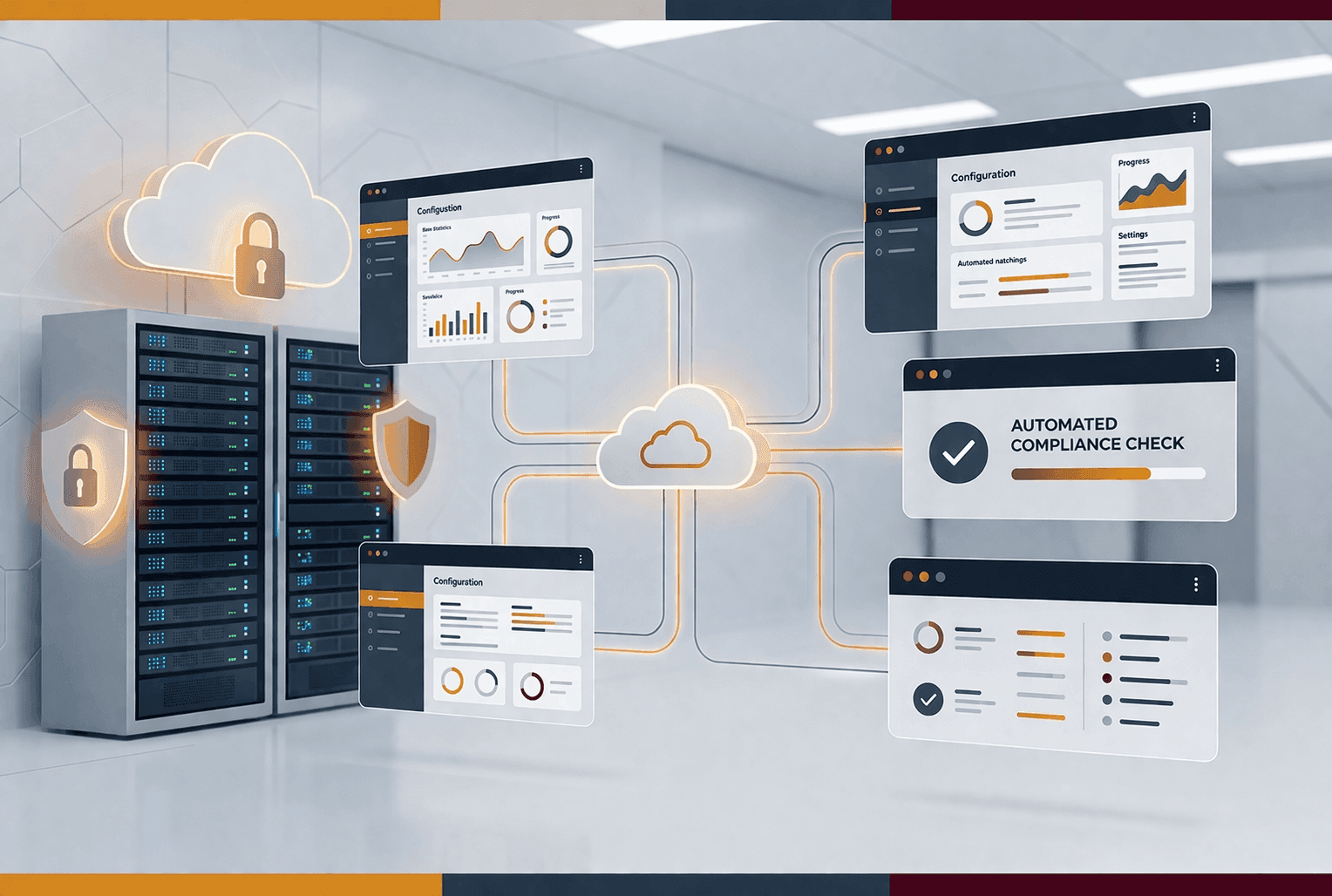
At Synchron Bilişim, our approach is to treat the cloud not as a single platform choice but as a holistic architecture design process. We put monitoring and alarm mechanisms in place from day one, configure the security layers (access policies, authentication, continuous monitoring) and set up the controls that provide cost visibility. This makes the cloud infrastructure manageable both technically and financially.
AI integration is also a natural part of this setup. Analytics solutions, performance monitoring, anomaly detection and automation scenarios are positioned in the cloud to increase operational efficiency. The cloud thus becomes not just running infrastructure but a platform that generates data, analyzes it and provides decision support.
In conclusion, the success of cloud transformation in Turkey depends on the right architecture planning and a sustainable management approach. At Synchron Bilişim, we design and manage this journey end to end for organizations that want to turn the cloud into an area of strategic value. For detailed information, contact us.
About the author
Synchron