Artificial Intelligence
AI-Powered Automation: How We Build End-to-End Integration from Airflow to Zapier
Businesses run CRM systems, ERP software, e-commerce platforms, accounting programs and various SaaS apps at once. When these systems do not work together, problems follow.
- Author
- Synchron
- Category
- Artificial Intelligence
- Published on
- Updated on
5 min read

Today, businesses use CRM systems, ERP software, e-commerce platforms, accounting programs and various SaaS applications at the same time. But when these systems do not work together, manual data transfer, operational errors and lost time become unavoidable. This is exactly where AI-powered automation and end-to-end integration solutions come in.
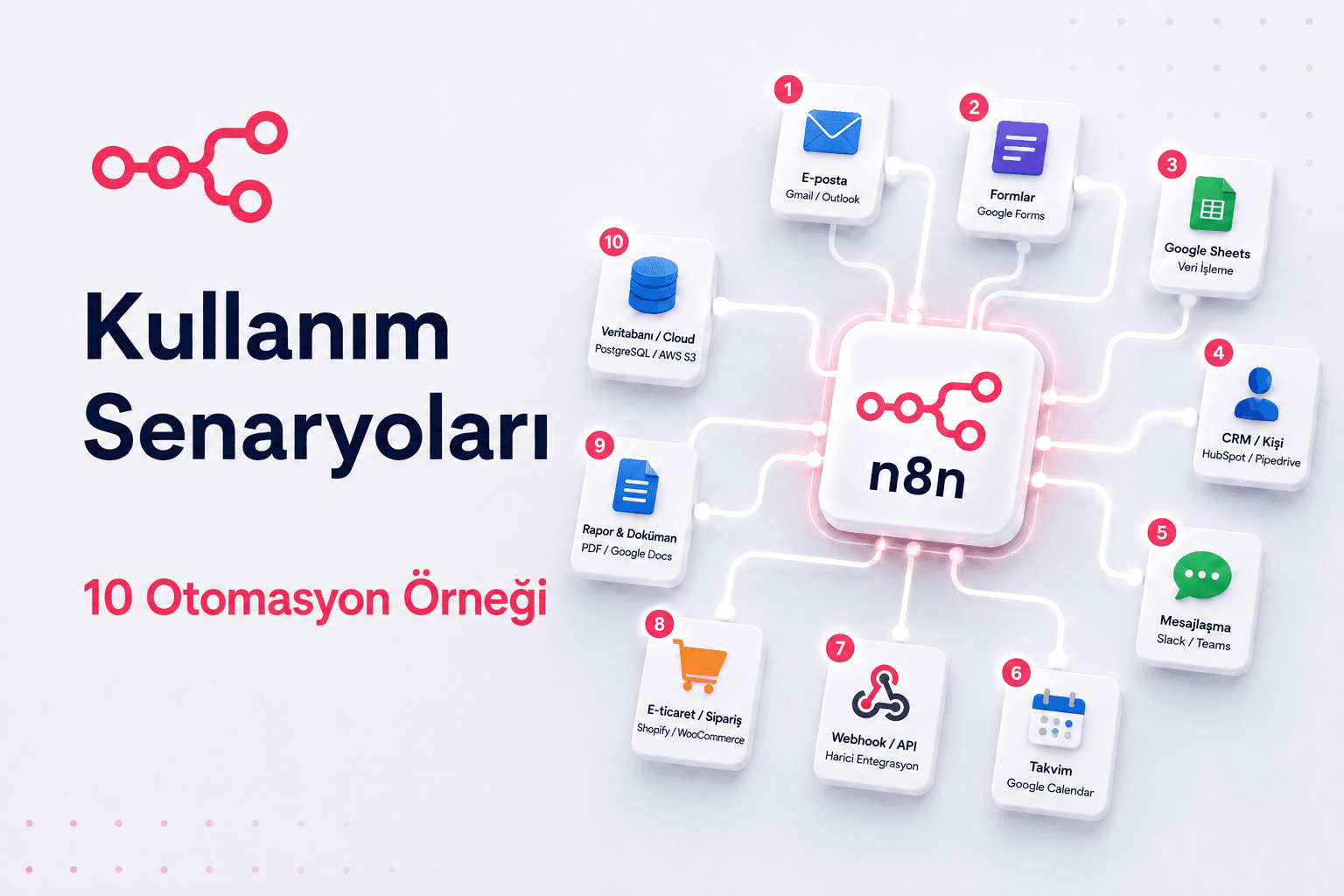
For modern businesses, automation alone is no longer enough. Processes need to be designed to be intelligent, scalable and secure. With the right architecture built on Airflow, n8n, Zapier, Node-RED and similar tools, systems are connected, data is given meaning and automated actions are triggered. In this article, we look in detail at how AI-powered automation is designed and how an integration architecture that spans from Airflow to Zapier is built.
What Is AI-Powered Automation?
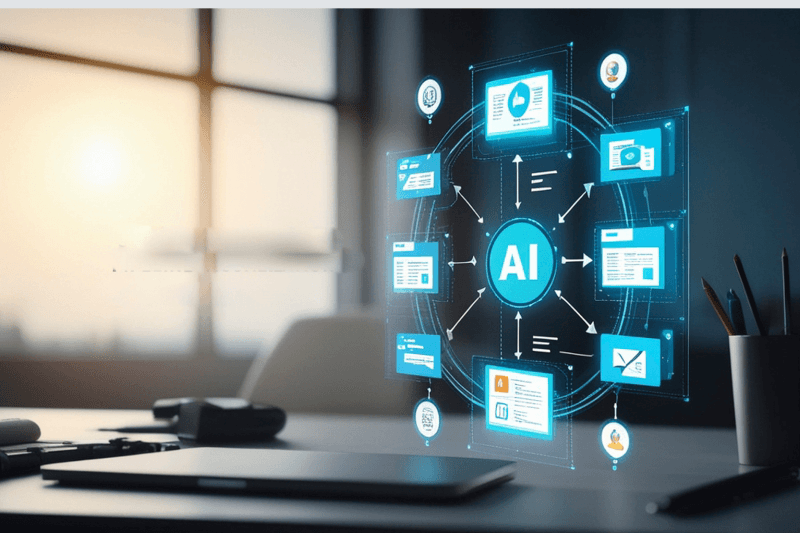
AI-powered automation is an approach that goes beyond classic workflows and brings decision-making into the process. Standard automation systems perform predefined actions based on a specific trigger. With AI integration, however, the system does more than execute actions; it analyzes and interprets data and can make dynamic decisions.
Take a support ticket system as an example. In a simple automation setup, a notification is sent to the relevant team when a new ticket arrives. In an AI-powered automation architecture, the system first analyzes the ticket, categorizes its content, sets its priority level and then routes it to the right department. The process becomes faster and human error is minimized.
This approach offers major advantages, especially in the following areas:
- Customer data analysis
- Automated reporting and data summarization
- Risk and fraud detection
- Operational decision support systems
- Dynamic workflow management
- Why Is End-to-End Integration Critical?
End-to-end integration means that every step of a business process, from start to finish, runs automatically and without interruption. In most companies, software runs in isolation; because there is no data flow or process link between applications, operations become disconnected. This leads to both lost time and hidden efficiency problems.
You can see this most clearly in task management processes.
For example, imagine a new customer request arrives at a company:
- The request comes in by email or through a form
- Someone creates a task manually
- The task is entered into the project management tool
- The department manager is informed
- The status is updated as the work progresses
- A report is prepared when it is completed
If these steps are not integrated, the process runs manually. Tasks can be forgotten, assigned to the wrong person or left without an up-to-date status.
With a well-designed end-to-end integration architecture, however, the process runs fully automatically:
- A request from a form automatically creates a task
- AI classifies it based on its content
- The task is assigned to the right department
- The SLA timer starts
- Managers receive automatic notifications throughout the process
- A performance report is generated on completion
Here, orchestration tools such as Airflow manage scheduled and dependent tasks, while platforms such as n8n or Zapier handle the data flow between applications. AI steps in for decisions such as setting task priority, analyzing content and assessing risk.
In the end, integration is not just about connecting systems; it is about making processes visible, measurable and optimizable.
How to Build a Layered Automation Architecture from Airflow to Zapier
A common mistake in AI-powered automation projects is trying to solve the entire process with a single tool. Modern integration requires a layered architecture. When each tool is positioned correctly, the system becomes both scalable and sustainable.
In the orchestration layer, Airflow manages scheduled tasks and data flows. It provides central control, especially for ETL, reporting and feeding AI models.
In the integration layer, n8n or Zapier creates fast data flows between CRM, ERP and other applications. This increases operational agility.
In the AI layer, data is analyzed, classified and turned into decisions. Automation thus becomes a system that thinks, not just one that executes.
A well-designed architecture means a faster, more secure and more sustainable digital infrastructure.
How Does AI Fit into This Architecture?
What makes automation "intelligent" is AI integration. Classic automation systems work within fixed rules; once you add an AI layer, the system does not just execute actions, it analyzes data and can make decisions based on context.
In our projects, we position AI in different use cases.
With automatic text analysis, support tickets, emails or form content are analyzed, categorized and routed to the right department. This removes the need for manual classification.
In report generation, raw data is turned into meaningful summaries. Operational data can be turned into decision support outputs for management.
In decision-making, AI can flag risky transactions, prioritize based on specific criteria or detect anomalies.
In data enrichment, customer or operational data is analyzed to build segments, identify behavior patterns and enable more strategic actions.
In this setup, AI is not a separate module but a natural step in the workflow. Data enters the system, is analyzed, the result is fed back into the workflow and an automatic action is taken. Automation thus becomes a structure that provides decision support, not just a system that manages processes.
Why Does the Right Partner Matter for AI-Powered Automation?
Success in AI-powered automation projects depends not only on choosing the right tools but on positioning them within the right architecture. When planned correctly, integration architectures that span from Airflow to Zapier give businesses speed, efficiency and operational clarity. Poorly designed systems, however, can over time become complex, hard to monitor and impossible to scale.
At Synchron Bilişim, we analyze your business processes, design the automation architecture that fits your needs and make AI integration a natural part of the system. We go beyond installation to build secure, scalable and sustainable infrastructure, making your processes not just automated but intelligent.
To make your workflows faster, smarter and more efficient, contact Synchron Bilişim.
About the author
Synchron