Artificial Intelligence
Automation Without Coding: No-Code and Low-Code Platforms
The technology world is changing fast, and one of the most striking aspects of this change is the democratization of software development through no-code and low-code tools.
- Author
- Synchron
- Category
- Artificial Intelligence
- Published on
- Updated on
5 min read
The technology world is changing fast, and one of the most striking aspects of this change is the democratization of software development. You no longer need to know how to program to build an application, set up automation or digitalize business processes. No-code and low-code platforms let users without technical knowledge create powerful digital solutions.
What Are No-Code and Low-Code?
No-code platforms are development environments that work entirely through visual interfaces and require no coding at all. These drag-and-drop systems make it possible for anyone to build applications. Low-code platforms let you get maximum results with minimal code. You build the core logic with ready-made templates and visual tools, and you can add custom code when needed.
These two approaches shorten the months-long processes of traditional software development to days or even hours. For businesses, this means agility and speed.
Why Are No-Code and Low-Code So Popular?
In modern business, digital transformation is not a luxury but a necessity. However, not every company has a large IT team or a software development budget. This is exactly where no-code and low-code platforms come in and give businesses an accessible solution.
With these platforms, small and mid-sized businesses can build many solutions in-house, from customer relationship management to inventory tracking and from appointment systems to reporting tools. This means not only cost savings but also the freedom to be in full control of business processes.
Automation Is Becoming Accessible to Everyone
Automation is the key to efficiency. Automating repetitive tasks lets employees focus on strategic work and minimizes human error. No-code platforms make setting up automation simpler than ever.
For example, a marketing specialist can set up email automations, build a CRM system or schedule social media posts without coding. An accounting employee can automate invoicing processes or build an expense tracking system. The human resources department can digitalize recruitment processes or create employee performance tracking systems.
Popular No-Code and Low-Code Platforms
There are many powerful tools on the market, and each offers advantages for different needs:
- Zapier
and Make (formerly Integromat)
: They automate repetitive tasks by building automation bridges between applications. They are especially ideal for quick integrations. - n8n
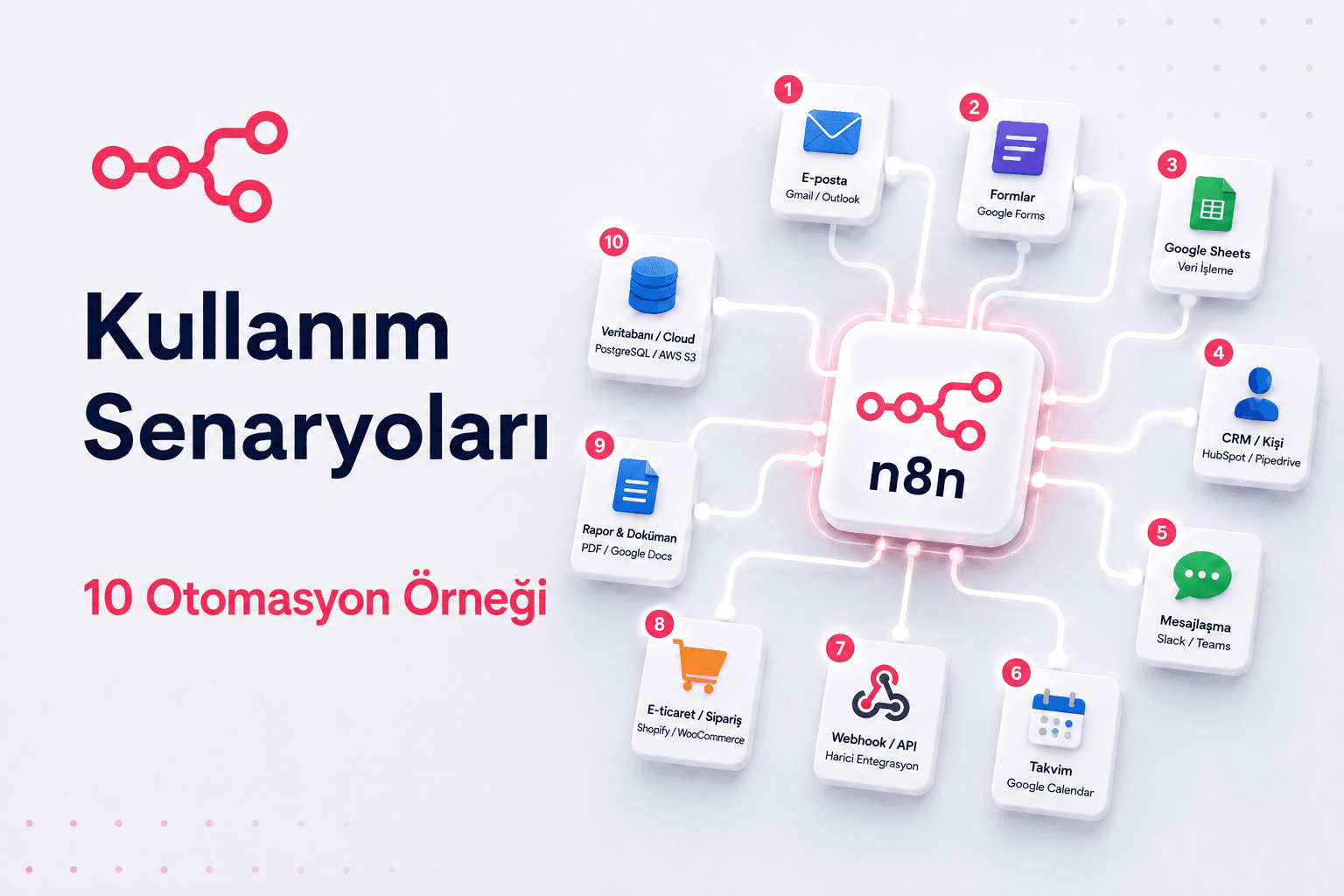
: An open-source, developer-friendly automation tool, n8n offers a no-code experience with visual workflows and also gives you the flexibility to customize with code when needed. Its self-hosting option is also a major advantage for data security. - Airtable
: Offers visual data management. It makes data tracking easier with different views such as table, form and gallery. - Bubble
and Webflow
: They let you build advanced web applications and websites without writing code. They are very strong in UI design and user interactions. - Microsoft Power Apps
and Google AppSheet
: Application platforms developed especially for enterprise needs. They offer deep integration with existing Microsoft and Google infrastructures.
Points to Consider
No-code and low-code platforms offer many advantages, but like any solution, they also have limits. For very complex, large-scale or industry-specific projects in particular, traditional software development methods may still be the better choice.
When choosing a platform, also consider these critical factors:
- Data security:
Carefully evaluate the platform's security standards, data encryption methods and access controls. - Platform dependency (vendor lock-in):
The system you build may have limited portability to another platform. For this reason, prefer platforms with open standards and integration capabilities. - Scalability:
Whether the system can handle your growing business volume is an important factor. - Legal compliance:
Compliance with data protection regulations such as KVKK (Turkish Personal Data Protection Law) and GDPR is essential, especially for companies that process customer data.
In short, these platforms are powerful tools, but choosing and using them requires a strategic approach. With the right analysis and a reliable technology partner, you can minimize these risks.
The Role of No-Code in the Future of Business
The no-code and low-code revolution is part of the democratization of business. Anyone with great ideas no longer needs a budget of millions of lira or years of training to bring those ideas to life. These platforms encourage innovation and remove barriers to entrepreneurship.
Being able to set up automation without coding is not only an individual advantage but also a powerful tool that increases organizational agility. By reducing their dependency on IT, businesses can let business units build their own solutions quickly.
Exploring no-code and low-code platforms on your digital transformation journey is one of the smartest ways to gain a competitive advantage. Technology is no longer just the IT department's job; it is a capability everyone can use.
Synchron Bilişim and Digital Transformation Support
No-code and low-code platforms turn digitalization from a responsibility of technical teams alone into an advantage the whole organization can access. Integrating this approach into your business processes not only increases efficiency but also supports a culture of innovation, increases agility and makes technology accessible to everyone.
Synchron Bilişim supports you in selecting, integrating and securely using the platforms that best fit your business. Whether you are just getting started or want to modernize your existing processes, we can define the right solutions for you together.
We do not just introduce tools; we turn the digital solution that fits you best into a system that is ready to use.
- We analyze your business processes together,
- We identify suitable no-code/low-code platforms,
- We develop custom integrations when needed,
- We set up the entire structure to fit your organization.
For detailed information, simply contact us.
About the author
Synchron