Cloud Technologies
Is Your Server Aging? 5 Advantages of Moving from a Physical Server to a VPS
Moving from a physical server to a VPS removes hardware risk, scales resources, and provides automatic backups and predictable costs. Review the 5 advantages.
- Author
- İrem
- Category
- Cloud Technologies
- Published on
- Updated on
5 min read
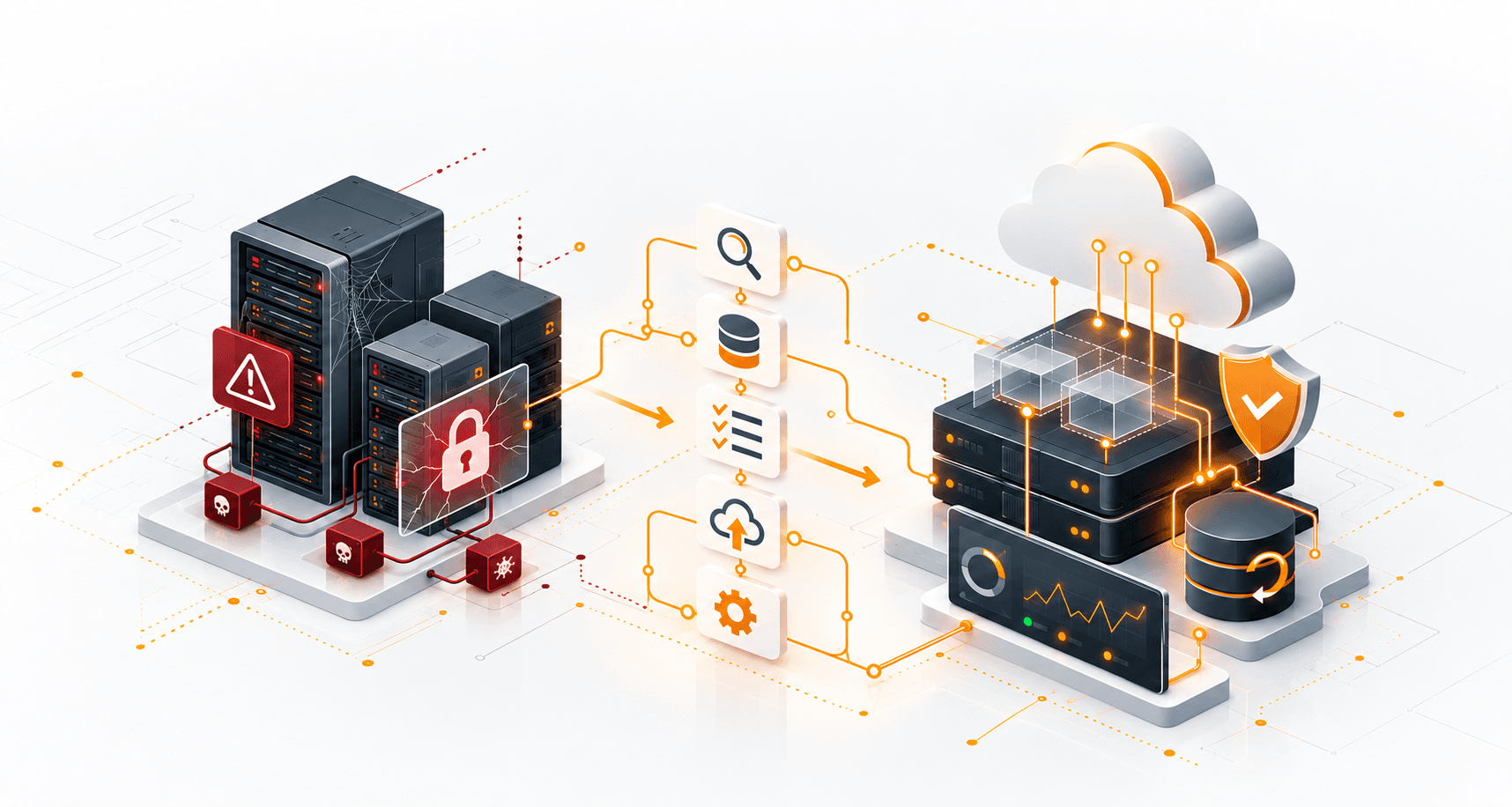
That familiar fan noise from the server room sounds a little different this time. Your IT lead has been trying to fix the fault for hours, and the spare parts supplier says the part is no longer manufactured. Meanwhile, production applications are not responding, the sales team cannot prepare quotes and the accounting team cannot access its invoices. A single hardware failure can bring the whole company to a standstill within a few hours.
For many SMEs that have run the same physical server in production for years, this is far from an unlikely scenario. As hardware ages, the risk of failure increases, spare parts become harder to find and performance falls behind the growing workload. This is exactly where moving from a physical server to a VPS offers businesses a concrete solution in terms of both risk and cost.
Today, many SMEs prefer to invest in operational continuity rather than hardware. Moving to a VPS stands out as one of the most concrete and fastest steps in this transformation. So what does this move actually deliver, and how does the process work?
What Is a VPS, and Why Now?
VPS (Virtual Private Server) hosting lets businesses move to a scalable, managed server infrastructure without a large hardware investment. Unlike a physical server, resources (CPU, RAM and disk) can be scaled up or down as needed, so the business pays only for the capacity it uses.
Hardware maintenance, upgrades and redundancy against failures are no longer the business's responsibility but the hosting provider's. This means the IT team can spend its time on projects that help the business grow instead of dealing with daily hardware issues.
The answer to "why now?" is simple: the older the hardware, the higher the risk of failure and data loss. Every month you postpone the move to a VPS means carrying that risk for another month.
5 Key Advantages of Moving from a Physical Server to a VPS
Moving from a physical server to a VPS means much more than a technical choice. Here is what this move concretely delivers for your business:
1. Freedom from Hardware Risk
Failures, power outages or cooling problems are no longer the business's responsibility but the hosting provider's. The provider manages hardware renewal, spare parts and redundancy against failures. This frees the business from the risk of an unexpected hardware failure stopping production for hours. This risk grows sharply on old servers whose spare parts are no longer manufactured.
2. Resources That Scale with Your Needs
Adding capacity no longer means buying new hardware, installing it and accepting downtime. CPU, RAM and disk resources can be scaled up or down instantly according to your workload. For an SME with seasonal peaks or rapid growth, this flexibility becomes a direct advantage in both performance and cost. Resources can usually be added within minutes, without downtime.
3. Data Security with Automatic Backups
Regular, tested backups are something many businesses neglect but most need in a disaster. VPS hosting solutions usually come with automatic backup mechanisms, which greatly reduce the risk of data loss and shorten recovery time after a failure. Backup frequency and retention can be configured to your needs and require no manual tracking.
4. 24/7 Monitoring and Proactive Maintenance
With physical server infrastructure, problems are often noticed only when users are affected. In VPS environments, server performance, resource usage and potential anomalies are monitored continuously, so many problems can be solved before they grow and before users notice. Proactive monitoring is one of the most important factors in minimizing downtime.
5. A Predictable, Manageable Cost Structure
The maintenance cost of an aging physical server rises over time and usually in unpredictable ways: unexpected part replacements, emergency service calls and rising energy consumption strain the budget. With VPS hosting, costs follow a more predictable model, which makes budget planning easier for SMEs. A fixed monthly cost also simplifies financial planning.
What to Watch for During the Migration
When planned correctly, a move to a VPS can be completed without disrupting operations. First, inventory your existing applications and data, and decide which systems will move first and which later.
Preserving data integrity during the transfer, not skipping the post-migration test phase and updating DNS and access settings in a planned maintenance window are the keys to a smooth migration. Working with an experienced hosting partner ensures that none of these steps is missed.
After the migration, the old hardware must also be decommissioned securely and the data on it erased in line with corporate policy. This step is often overlooked but is an important detail for data security.
Conclusion: Don't Let Your Server's Age Decide Your Business's Future
Moving from a physical server to a VPS is not just a technical infrastructure change; it is a strategic step for the business's growth, security and operational continuity. Eliminating hardware failure risk, scaling resources to your needs and gaining a predictable cost structure become a competitive advantage in the long term.
If your server's age and growing maintenance load concern you too, we can assess together what a move to a VPS would mean for your business. A well-planned migration can be completed without disrupting your operations and can deliver a noticeable performance gain in a short time.
At Synchron Bilişim, we analyze your VPS infrastructure needs and design a scalable solution for your business together with you. We support you at every step, from migration planning and data transfer to testing and go-live. For detailed information about our VPS hosting services , contact us.
About the author
İrem