Cloud Technologies
What Is Data Sovereignty? Which Country Is Your Company Data In?
Do you know which country your data is stored in? Synchron Bilişim explains what data sovereignty is, why it matters and what it means for companies in Turkey.
- Author
- Synchron
- Category
- Cloud Technologies
- Published on
- Updated on
4 min read
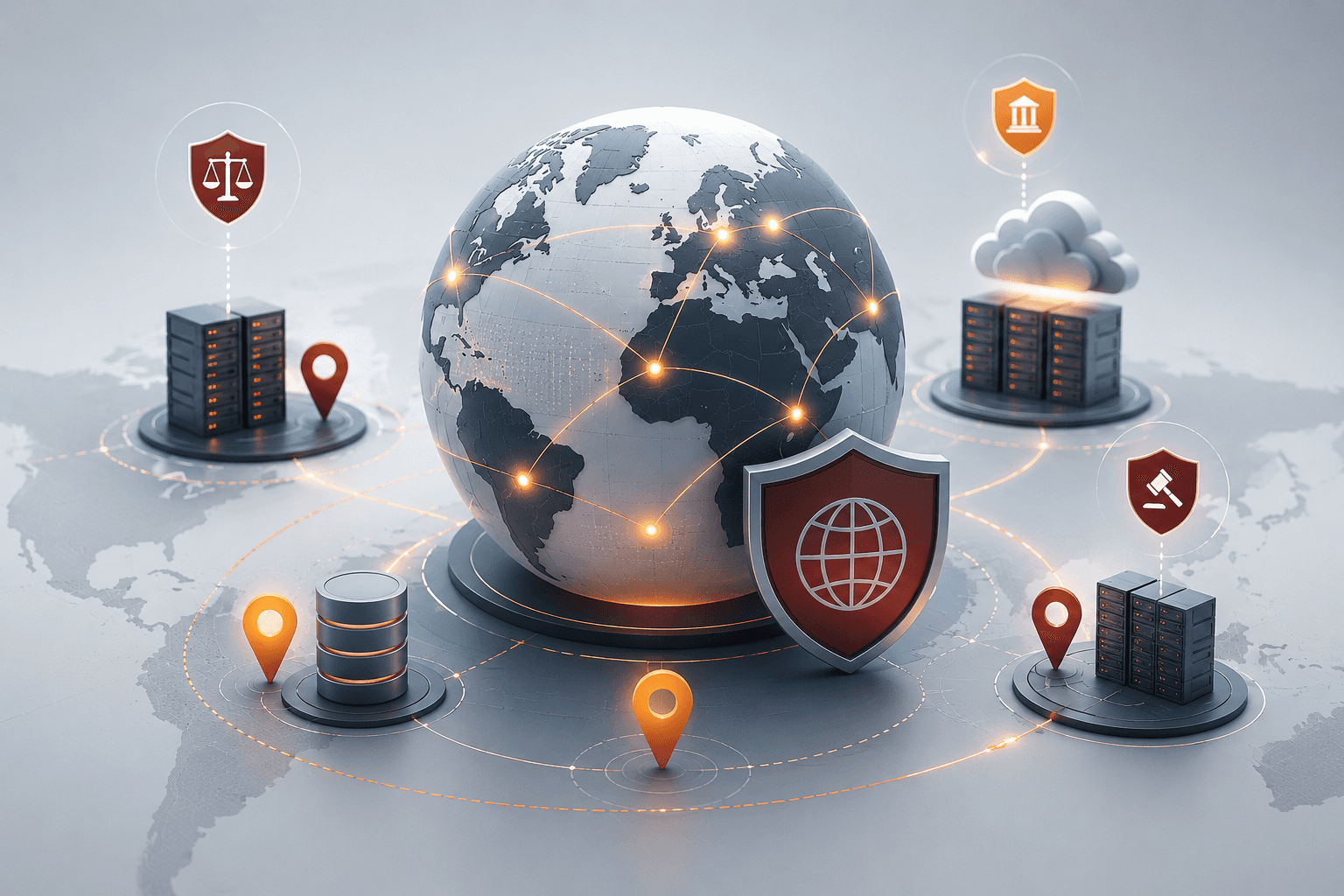
Data sovereignty is a country's right to manage and oversee data produced or stored within its borders under its own laws. Put simply, the law of the country where the data is located applies to that data.
In recent years, this concept has become a critical strategic issue for both governments and companies. The reason is simple: with the spread of cloud technology, data now crosses physical borders. Depending on where the servers are located, the data of a company operating in Turkey can be subject to the laws of the United States, Ireland, Singapore or the Netherlands.
Where Is Your Data Stored?
Most of the digital services you use store your data in data centers abroad. Let us look at a few examples from your day-to-day business processes:
The widely used Microsoft 365 and Google Workspace services usually use data centers in Ireland or the Netherlands for European users. CRM platforms such as Salesforce and communication tools such as Slack can also keep your data on US-based servers. For most free or low-cost SaaS tools, the data center location is not stated clearly at all.
What does this mean in practice? The government of the country where your data is stored can request access to that data within a legal framework. Companies operating in the US can be required under the CLOUD Act to provide data stored abroad to US authorities. Data kept on servers in Europe is subject to the GDPR. Data in Turkey falls under KVKK.
KVKK and Data Localization Requirements
In Turkey, the Personal Data Protection Law (KVKK) makes the transfer of personal data abroad subject to specific conditions. Personal data cannot be transferred abroad without the explicit consent of the data subject or adequate protection safeguards.
Many companies are not even aware that the third-party software they use automatically transfers records containing personal data abroad. Customer email addresses, order histories and employee identity information all count as personal data, and where they are stored is extremely important from a legal point of view.
KVKK violations can result in administrative fines, and a data breach can also lead to reputational damage and an erosion of customer trust.
Why Is Data Sovereignty a Strategic Issue for Companies?
Data sovereignty is not only a matter of legal compliance; it is also a matter of competitive advantage and operational security.
Being sure that competitors cannot access your data, being able to tell your customers that their data is kept secure in Turkey and protecting business continuity in the event of geopolitical tension are all directly linked to your data sovereignty policy.
In sectors such as finance, healthcare, law and public services in particular, data localization is increasingly becoming a mandatory standard. This trend is also spreading quickly to other sectors.
The picture is also changing for SMEs that work with large corporate customers. Data security and localization policies are questioned more and more often in procurement processes. Suppliers that cannot explain where their data is kept are eliminated from tenders.
How Do You Assess Your Company's Data Sovereignty Position?
To start, try to answer these questions:
Do you know the data center location of every SaaS tool you use? Do your contracts clearly state where data is processed and stored? Which customer or employee data do third-party applications access, and where does that data go? Have you evaluated options hosted in Turkey or the EU for your cloud infrastructure?
If you cannot answer most of these questions, it is time to carry out a data mapping exercise. Making it visible which data is produced where, where it is transferred and how it is stored is a fundamental step for both compliance and security.
The Solution: Keeping Data Under Control
There are several approaches to data sovereignty concerns. You can keep your data fully under your own control by setting up an on-premises server infrastructure. You can choose local cloud providers that operate data centers in Turkey. With managed solutions such as an enterprise file server, corporate email and VPS services, you can make the location of your data defined and auditable.
At Synchron Bilişim, we provide enterprise file server, VPS and cloud management services to keep company data on-premises or on an auditable infrastructure. Knowing where your data is and being able to control that location is no longer a choice; it is an essential part of business security.
To review your data infrastructure and identify the right solution, you can talk to our expert team.
About the author
Synchron