Cyber Security
Quantum Computers Are Coming: Preparing for Post-Quantum Cryptography
What is post-quantum cryptography, and what do the NIST standards say? A 4-step preparation plan and practical recommendations for SMEs against the quantum threat.
- Author
- İrem
- Category
- Cyber Security
- Published on
- Updated on
5 min read
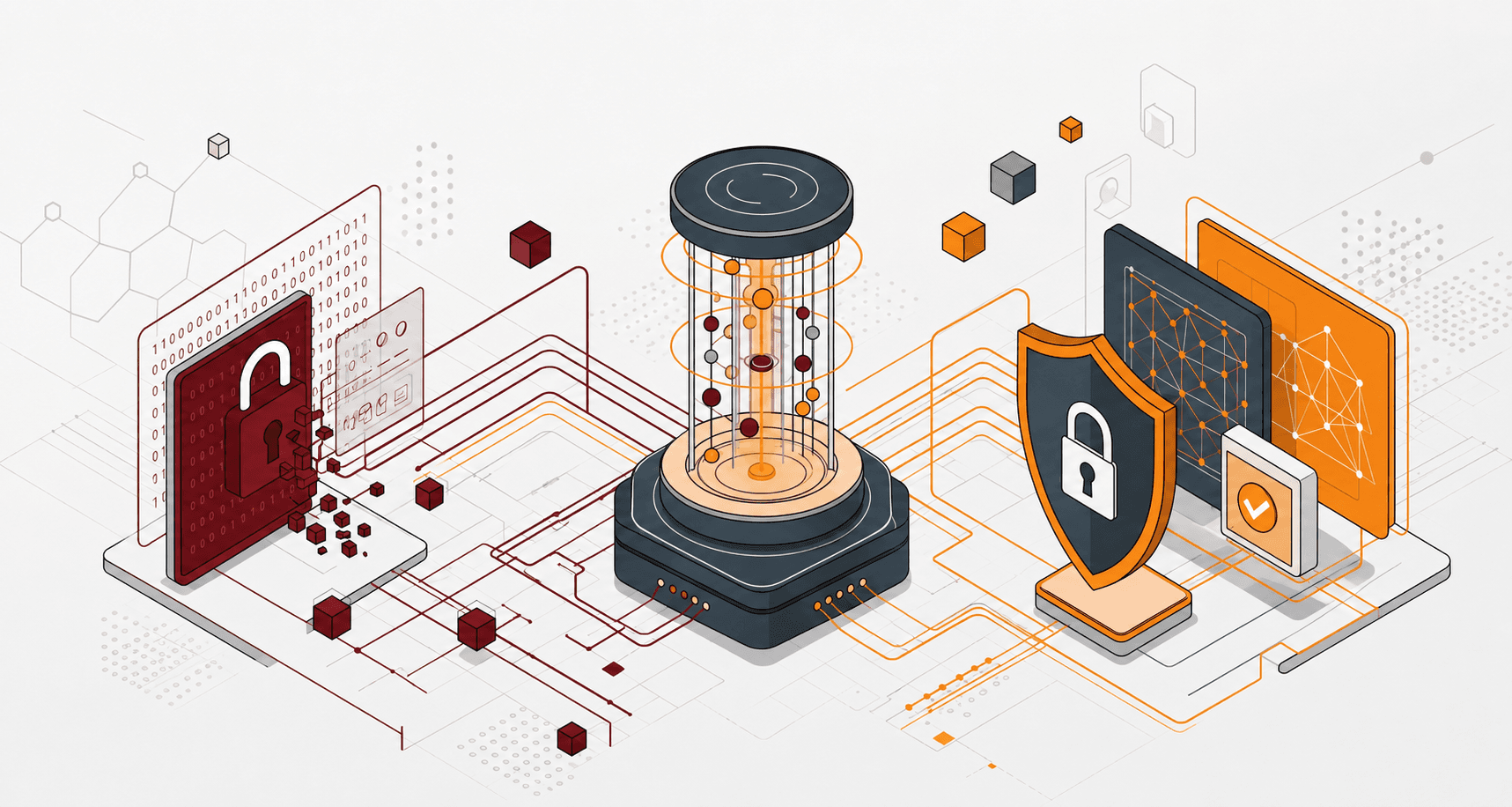
An encrypted email you send today, a contract you sign or the customer records you store in your database may look safe for now. But one day, when a quantum computer that can break today's strongest encryption methods within minutes comes online, data stolen today could turn into plain text. And attackers do not even need to wait for that day: they are already collecting encrypted data today. That is why post-quantum cryptography is not a topic for the future; it is on today's agenda.
For many years, quantum computing was seen as "the distant future." As of 2026, however, the picture has changed. Standards have been set, migration timelines have been announced and large organizations have started to act. So what does the move to post-quantum cryptography mean for SMEs, and which steps should they take now?
Why Does the Quantum Threat Matter Already?
Much of internet security today relies on asymmetric encryption algorithms such as RSA and ECC. The security of these algorithms rests on the fact that classical computers would take so long to solve certain mathematical problems that it is practically impossible. Quantum computers approach these problems in a fundamentally different way and, in theory, have the potential to break this encryption.
This is where the "harvest now, decrypt later" strategy comes in. Attackers collect and store encrypted data they cannot decrypt today; their goal is to open this archive retroactively once a sufficiently powerful quantum computer is available. This is already a real risk for any organization with long-lived sensitive data: health records, financial information, intellectual property, state secrets and long-term contracts.
In other words, the fact that quantum computers arrive "tomorrow" does not change the fact that the risk starts "today." If you are protecting data today that must stay confidential for ten years, that data is already under threat. The quantum threat should therefore be part of your cybersecurity planning starting today.
The Standards Are Set: Post-Quantum Cryptography Is Now Concrete
This threat is no longer an abstract concern, and the standards to counter it are ready. In 2024, the US National Institute of Standards and Technology (NIST) formalized the first quantum-resistant encryption standards. The main ones are:
- FIPS 203 (ML-KEM, based on CRYSTALS-Kyber): for key exchange
- FIPS 204 (ML-DSA, based on CRYSTALS-Dilithium): for digital signatures
- FIPS 205 (SLH-DSA): as a hash-based alternative
A timeline for the migration is also taking shape. International regulators and public bodies have started publishing roadmaps that make the move to quantum-resistant encryption mandatory by specific dates; for public sector suppliers, the migration is already tied to concrete targets such as 2030. This means the direction is clear for the private sector too: the post-quantum migration is not a "possibility" but a matter of time.
Large technology companies and cloud providers have already started updating their infrastructure with quantum-resistant algorithms. For SMEs, however, the topic is still often seen as "a future that does not concern us." Yet planning the migration correctly can take years, and organizations that start early will have an advantage in both cost and risk.
How Should SMEs Prepare for the Post-Quantum Era?
There is no need to panic, but there is no longer any excuse to wait. The following steps prepare your organization for this transition on a solid foundation:
1. Build Your Cryptographic Inventory
This is the first and most critical step: if you do not know which encryption algorithms your systems, applications and communication channels use, you cannot know what to protect. Map where your critical data is stored, how long it must remain confidential and which algorithms protect it.
2. Prioritize Your Data by Lifetime
Data that must remain confidential for a long time (intellectual property, legal records, health and financial data) is the most exposed to the "harvest now, decrypt later" risk. Prioritize this data to put the focus of your migration plan in the right place. Do not forget to include your long-term archives and backup copies in this assessment.
3. Achieve Crypto-Agility
The goal is not only to move to a new algorithm but to build a flexible infrastructure that makes it easy to change algorithms in the future. Instead of embedding encryption methods deep in your systems, aim for an architecture that makes them easy to update.
4. Question Your Suppliers' Roadmaps
Are the software, cloud services and hardware you use ready for the post-quantum migration? Ask your suppliers and technology partners about their roadmaps on this topic. Your security depends to a large extent on their readiness too.
Frequently Asked Questions About Post-Quantum Cryptography
What is post-quantum cryptography?
Post-quantum cryptography (PQC) is a new generation of encryption algorithms based on mathematical problems that quantum computers cannot solve. NIST has standardized these algorithms to replace current asymmetric algorithms such as RSA and ECC.
How does a "harvest now, decrypt later" attack work?
Attackers record and store encrypted traffic and data they cannot decrypt today; they aim to decrypt this archive retroactively once a sufficiently powerful quantum computer becomes available. That is why long-lived sensitive data is already at risk today.
When should SMEs start the post-quantum migration?
Now. The migration can take years because it includes steps such as building a cryptographic inventory, classifying data and assessing suppliers. Concrete targets such as 2030 have already been set in the public sector supply chain; organizations that start early gain an advantage in both cost and risk.
Conclusion: Early Preparation Is the Strongest Encryption
For SMEs, the post-quantum migration is not a task to finish overnight but a strategic transformation that requires proper planning. Given that data stolen today can be decrypted tomorrow, waiting "for quantum computers to be ready" before you act is the riskiest option.
At Synchron Bilişim, we support you at every stage of your post-quantum preparation journey, from building your organization's cryptographic inventory and classifying data to designing a crypto-agile infrastructure and assessing supplier risks. To assess your organization's current readiness for the quantum threat together, contact us.
About the author
İrem