Cyber Security
Do You Have to Pay the Ransom? 5 Critical Decisions During a Ransomware Attack
The first-hour decisions in a ransomware attack determine the damage. From isolation to the ransom decision, learn 5 critical steps to protect your business.
- Author
- İrem
- Category
- Cyber Security
- Published on
- Updated on
5 min read
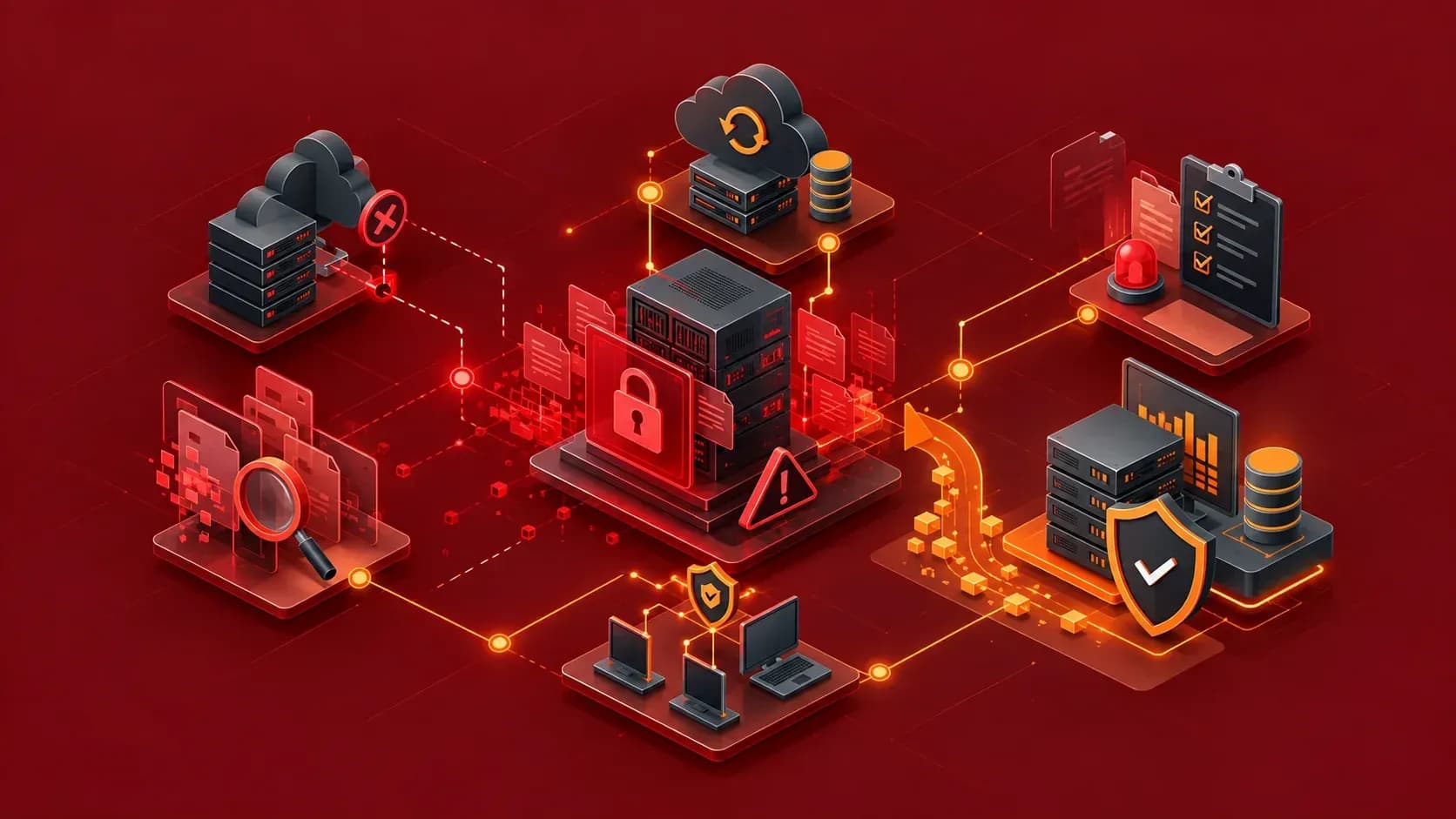
The message on the screen is clear: your files have been encrypted, and you must pay to get them back. The countdown has started, the accounting team cannot work, the production line has stopped, and the phones keep ringing. The first few decisions you make during a ransomware attack will directly determine how the coming days go — and even how much damage your business takes from the incident.
Ransomware attacks no longer target only large organizations; they also target SMEs. Limited security budgets and limited incident response capacity make small and medium-sized businesses an increasingly attractive target for attackers. So which decisions make the biggest difference during a ransomware attack?
In this article, we look at five critical decisions that you can apply calmly in a moment of panic, together with the reasons behind them. The aim is to make clear what your team must do before an attack happens — because in a crisis you will have no time to improvise.
Why Is a Ransomware Attack So Destructive?
When a ransomware attack starts, the most critical period is the first few hours. The decisions made in this time directly determine the extent of the damage and how long operations stay down.
Businesses caught unprepared often find themselves in the dilemma of “pay the ransom or stay offline?”
Attackers usually choose the busiest periods of a business — month-end, peak order times, the days before a holiday. This makes the quality of decisions made under pressure even more critical.
5 Critical Decisions to Make During a Ransomware Attack
These are the steps to apply calmly in a moment of panic:
1. Isolate the Affected Systems from the Network Immediately
Turning off the wireless connection, unplugging the Ethernet cable or moving the affected server to an isolated network segment can stop the attack from spreading to other systems. The speed of this step directly determines how many systems the attack reaches and therefore how large the damage is. Isolation also limits the attacker’s movement inside the network and prevents further encryption of the remaining systems.
2. Document the Incident; Do Not Shut Down Systems in Panic
Documenting the ransom note, the affected file extensions and the time the attack was noticed is critical for forensic analysis as well as for insurance and legal processes. Shutting down systems in a hurry can, in some cases, destroy valuable forensic evidence. For this reason, keep the decision to isolate separate from the decision to shut down.
3. Verify the Integrity and Currency of Your Backups
The most important question during an attack is: “Does our backup really work?” An untested backup strategy can turn into a major disappointment in a crisis. Making sure that the backups were not affected by the attack and can be restored significantly reduces the pressure to pay the ransom.
4. Do Not Make the Ransom Decision Alone
The short answer: no, you do not have to pay the ransom — and paying does not solve the problem by itself. Paying does not guarantee that the data comes back: the decryptor from the attacker can be slow or faulty, payment does not undo a possible leak if the data was copied beforehand, and a business that pays can face a higher risk of being targeted again.
Make this decision together with legal counsel, cybersecurity experts and, where necessary, the competent authorities, and assess its legal and ethical aspects as well as the operational ones. A decision made by a single manager under pressure can expose the business to additional risks and can be questioned later.
5. Plan the Post-Incident Process and Close the Security Gap
The work does not end when the systems are back up. You must find the entry point of the attack, close the related vulnerability and review your processes. Otherwise, a new attack through the same vulnerability may follow within a short time.
Preventive Steps to Protect Against Ransomware Attacks
Stopping the attack in the first place is as important as making the right decisions. Regular software updates, multi-factor authentication (MFA) and network segmentation are among the basic measures that make it harder for an attacker to get into the system and spread.
Employees’ ability to recognize phishing emails is as important as the technical measures, because a large share of ransomware attacks starts when an employee clicks a suspicious link. For this reason, address technical measures and human awareness together.
Making your backup strategy follow the “3-2-1 rule” — three copies, on two different media, with one copy kept in a physically separate location — significantly increases your chance of recovering data after a ransomware attack.
Testing a written incident response plan at least once a year with a tabletop exercise makes sure that the plan does not stay on paper and really works in a crisis. When the team knows its roles in advance, decisions during an attack are made faster.
Conclusion: The Best Defense Is Preparing Before the Attack
The greatest advantage against ransomware attacks is being prepared before an attack happens. A tested backup strategy and a written incident response plan are the most valuable steps you can take before you face the dilemma of “pay the ransom or stay offline?”
Businesses that make the right decisions in the first hour can significantly limit both operational disruption and reputational damage. Building this readiness today can greatly change the outcome of a crisis you may face tomorrow.
At Synchron Bilişim, we assess the incident response readiness of your business and strengthen your backup strategy together with you. From preventive security measures to incident response planning, contact us to discuss your readiness against ransomware attacks.
About the author
İrem