Cyber Security
The Supplier You Trust Could Be Your Biggest Weakness: Supply Chain Attacks
Supply chain attacks get into your organization through the suppliers you trust. Learn how they work and 4 measures that reduce third-party risk for your business.
- Author
- İrem
- Category
- Cyber Security
- Published on
- Updated on
4 min read
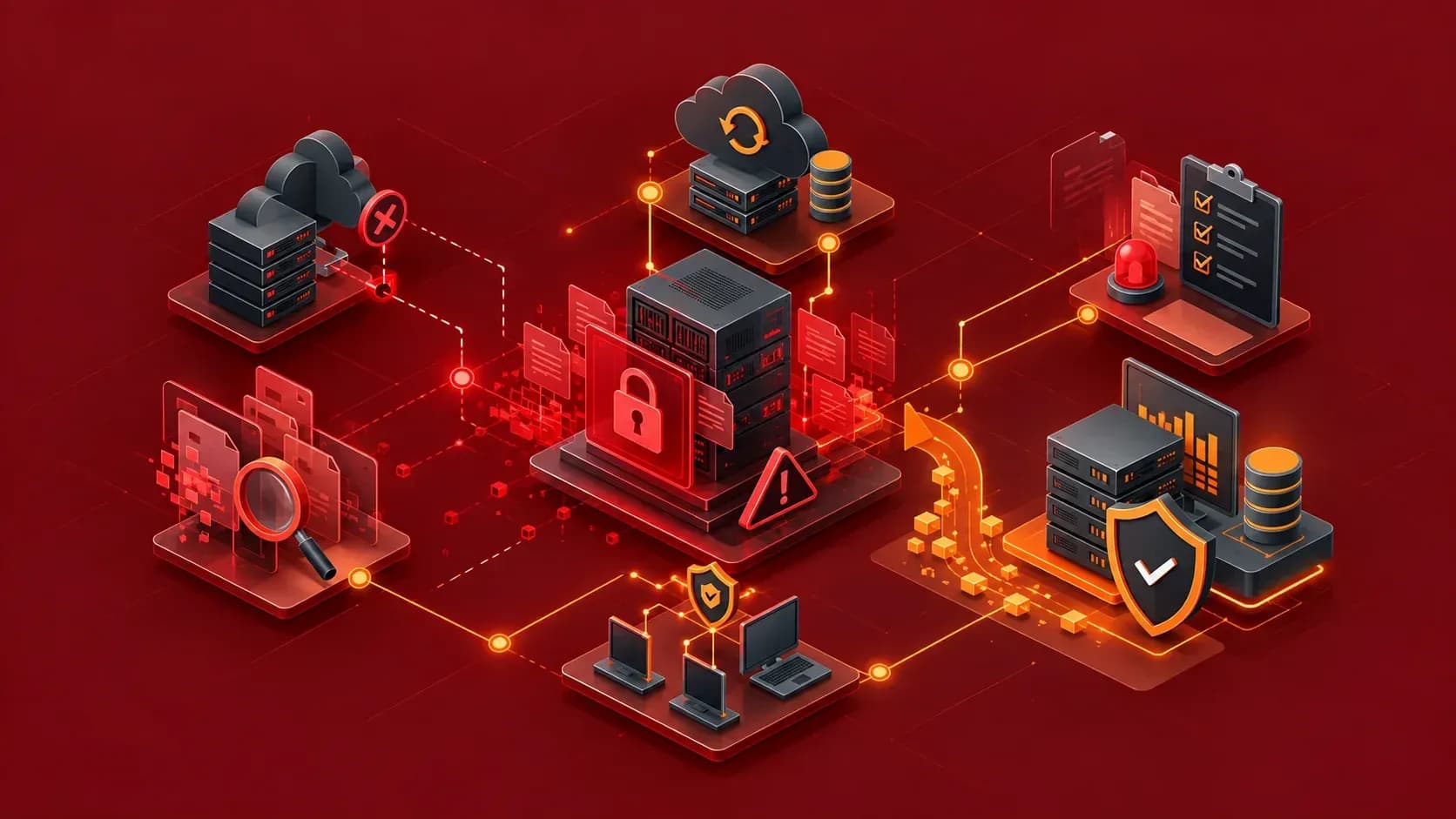
Your firewall is strong, your employees are trained and your systems are up to date. You have defended your own castle carefully. But what if the threat comes in not through the front door but through a side door opened by a business partner you have trusted for years? Through an update to your accounting software, a vulnerability at your cloud provider or a supplier's stolen access credentials?
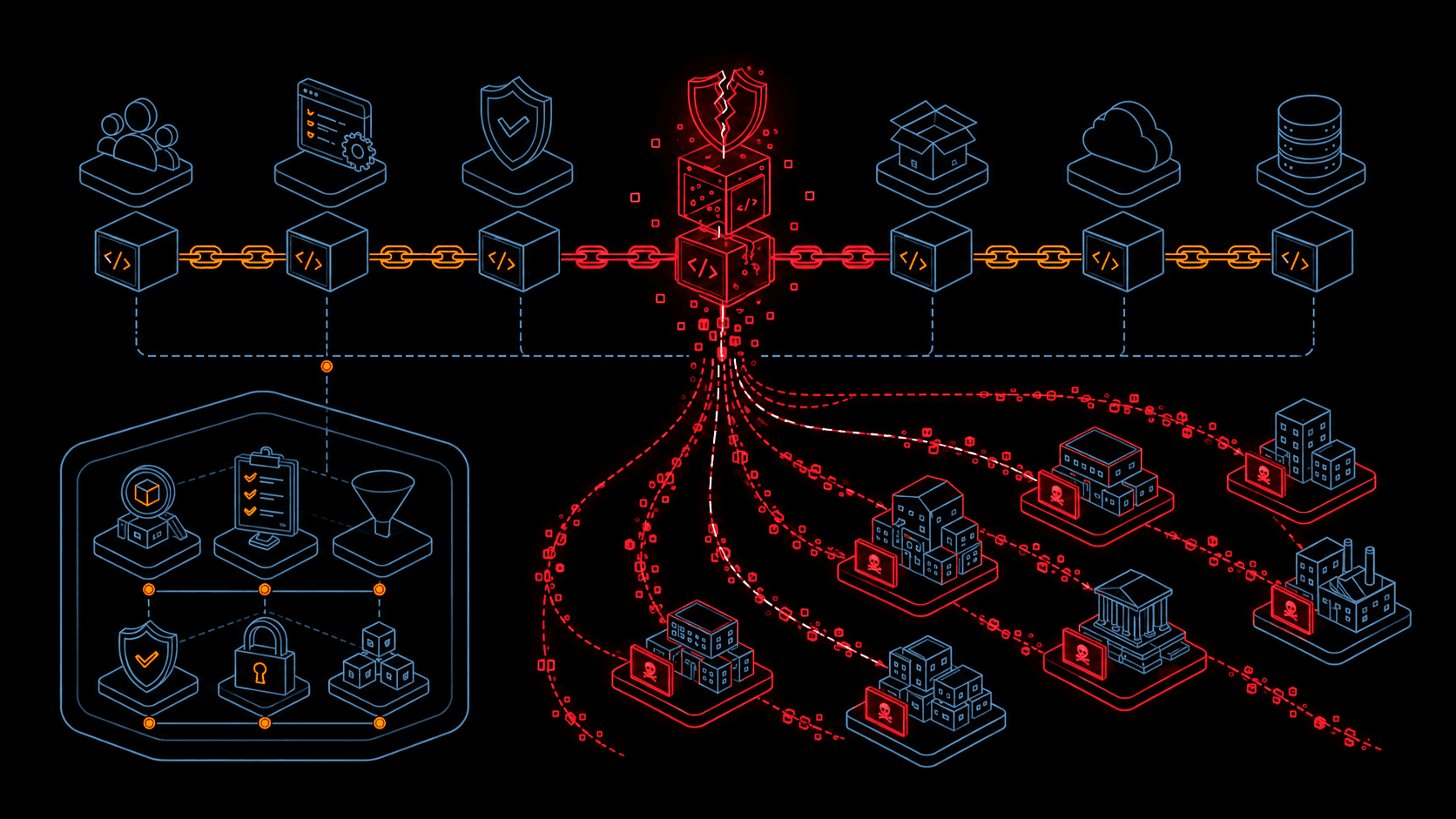
Supply chain attacks work on exactly this logic. Instead of attacking a well-protected organization directly, attackers target the software vendors, service providers or business partners that the organization trusts, and that are usually less well protected. A single vulnerability can then reach dozens or even hundreds of companies at the same time through the back door. So why are these attacks so effective, and how can you protect your organization?
How Does a Supply Chain Attack Work?
In a supply chain attack, the target is not the final victim itself but the easiest way to reach it. An attacker can compromise the vendor of widely used software and hide malicious code inside a legitimate update. Every company that installs that update unknowingly invites the attacker into its own network. Similarly, a compromised account of a supplier with access to your systems can become a door that opens directly onto your data.
The appeal of this method for attackers is clear: a single successful intrusion reaches many organizations through a multiplier effect. For the victims, the attack is much harder to notice because it comes from a trusted source. A legitimate update or a link from a familiar business partner may not set off alarm bells even in the most careful team.
The Numbers: The Price of Trust Is Rising
Supply chain attacks are no longer exceptional cases; they are one of the main sources of data breaches. Recent research shows that roughly a quarter of modern data breaches stem from a third-party vulnerability. In other words, one in four breaches originates not from the organization's own systems but from an external connection it trusts.
The scale of the impact is also worrying. Reports indicate that third-party breaches can affect far more data per incident than direct attacks, and that most disclosed third-party vulnerabilities are weaponized by attackers within the same year. Add the acceleration of AI-powered phishing campaigns, and your supplier ecosystem becomes an increasingly attractive target for attackers.
The bottom line: security no longer ends within your own walls. Your organization's real security perimeter is only as strong as the weakest supplier with access to your systems.
Measures to Take Against Supply Chain Risk
You cannot do without your suppliers; modern business is built on interconnected ecosystems. But you can manage the risks of these connections. Here are the key steps that will strengthen your organization:
1. Perform Third-Party Risk Assessments
Regularly assess the security level of every supplier that has access to your systems or provides critical services. The assessment should cover their security certifications, data protection practices and incident response capabilities. Questioning a new supplier's security posture before you start working with them should be an integral part of the contract.
2. Apply the Principle of Least Privilege
Do not give any supplier more access than it needs. If a business partner only needs access to one specific system, do not open the door to your entire network. Limiting access rights to the task dramatically narrows how far an attack can spread when a supplier is compromised.
3. Review Supplier Access Regularly
When did you last check your business partners' access rights? Accounts no longer in use, access left over from finished projects and forgotten integrations are open invitations for attackers. Review access rights at regular intervals and remove the ones that are no longer needed.
4. Design Network Segmentation and Monitoring
Set up a segmentation structure that separates supplier access from the rest of your network. That way, an intrusion that comes through a supplier cannot easily spread to your critical systems. Also monitor traffic from third-party connections actively so you can detect unusual activity.
Conclusion: Trust Is Good, Verification Is Better
Supply chain attacks clearly show that security can no longer be achieved within an organization's own boundaries alone. Third-party risk assessment and limiting supplier access are no longer an optional "good practice" but a mandatory security practice. You can keep trusting your suppliers, as long as you verify that trust regularly.
At Synchron Bilişim, we map your organization's supply chain risks and help you bring them under control with third-party access management, applying the principle of least privilege, network segmentation and continuous monitoring solutions. To assess the security level of your supplier ecosystem together, contact us.
About the author
İrem