Artificial Intelligence
What Is the Danger of "Shadow AI"? Uncontrolled Automation in Enterprise Clouds
Put simply, Shadow AI is the use of AI tools that are not officially approved within an organization by employees in their business processes, outside IT oversight.
- Author
- Synchron
- Category
- Artificial Intelligence
- Published on
- Updated on
6 min read
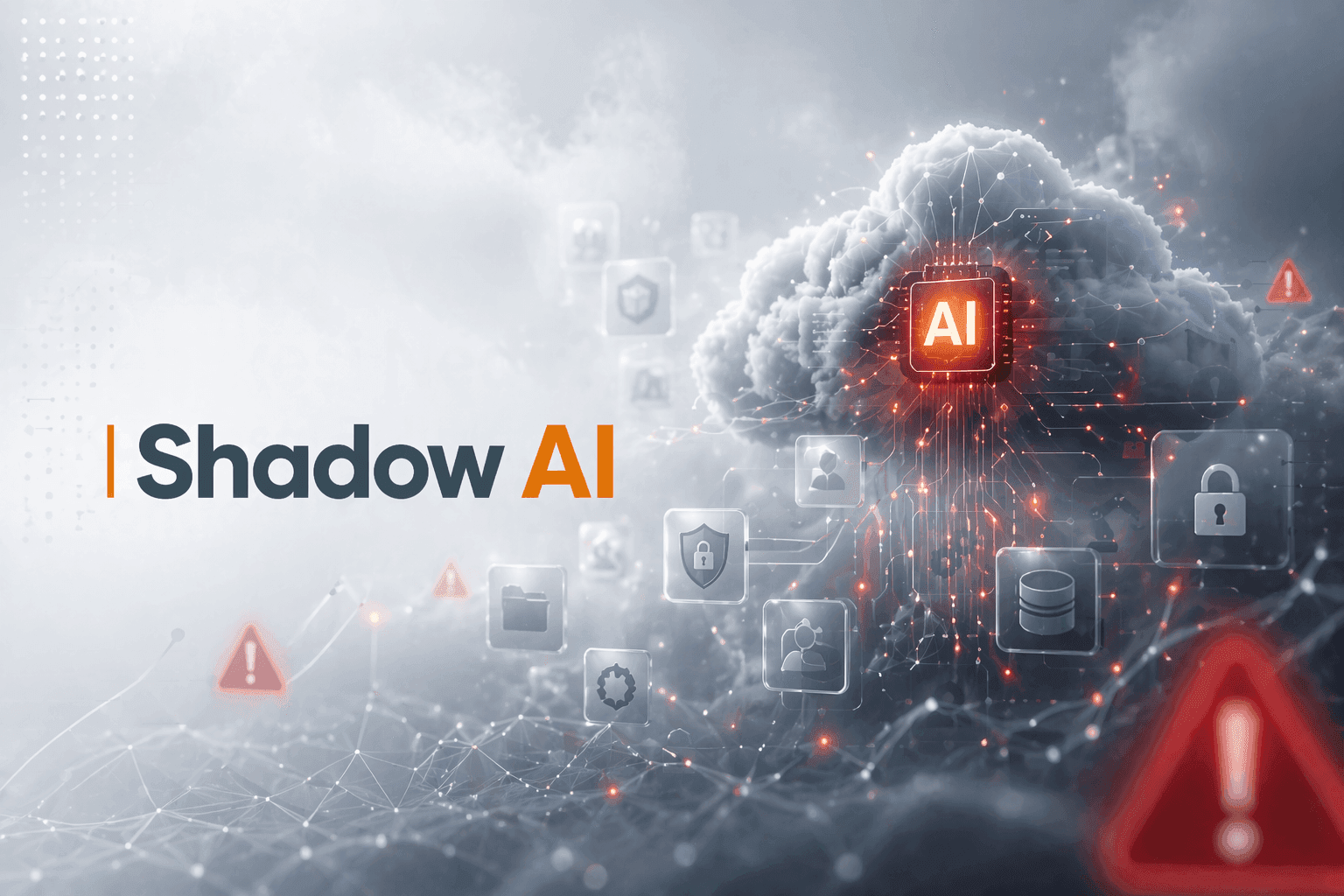
AI tools promise speed, efficiency and convenience in the business world. Summarizing a text in seconds, organizing meeting notes, preparing a report or automating repetitive tasks now takes just a few prompts. This is exactly why employees, to speed up their daily workflows, often turn to various AI solutions without waiting for approval from IT teams. This uncontrolled and invisible area of use is called "Shadow AI" .
Put simply, Shadow AI is the use of AI tools that are not officially approved within an organization by employees in their business processes. This kind of use may look harmless or even helpful at first glance, but it creates a serious oversight gap, especially in enterprises. Every tool that IT teams cannot see brings uncertainty about what data it accesses, where it processes that data, how it stores it and how it interacts with third-party systems.
The main reason this is spreading is that employees under pressure to be productive need to deliver results faster. Where official systems are slow or not flexible enough, many teams start building their own solutions. The growing number of cloud-based services and user-friendly AI tools makes this shift much easier. The result is a layer of technology use that grows unnoticed within the organization but becomes increasingly critical.
The problem is not the use of AI itself; it is that this use happens outside the framework of control, governance and security. In an enterprise, every invisible use of technology eventually stops being just a productivity choice and becomes a direct risk. This is exactly where Shadow AI becomes dangerous.
What risks does uncontrolled automation create in enterprise clouds?
Enterprise cloud environments speed up business processes with their flexibility and scalability, but uncontrolled automation also creates new areas of risk. When AI-powered tools integrated directly with cloud-based applications are left without oversight, the organization's security boundaries can become blurred. Even a simple automation that an employee starts in good faith can unknowingly send sensitive data outside the organization.
The first of these risks is data leakage . Documents, customer records, contracts, internal correspondence or financial data uploaded to unapproved AI tools can be processed in third-party systems in breach of company policy. The organization often cannot know where this data is held, how long it is retained or whether it is used to train other models. This has not only technical but also legal and reputational consequences.
Another important risk is unauthorized access and loss of control. Automations built between cloud services usually work through API permissions, user accounts and connected applications. Without enough visibility and oversight, these connections can lead to excessive permissions and unexpected exposure of critical internal systems. Even a small configuration error can turn into a wide-reaching security vulnerability.
In addition, compliance violations must not be overlooked. Especially in regulated industries, how data is processed, who accesses it and in which systems it is held must be clearly defined. Shadow AI-based automations weaken this traceability. Even if a working solution appears to exist inside the organization, audit and reporting processes break down when no one fully knows which processes are running in the background.
The most critical point is this: uncontrolled automation looks like a practical solution that improves efficiency at first, but when it is deployed without security, governance and policy layers, it creates a new attack surface for the organization. In the enterprise cloud, the real threat is not only the technology itself but its invisible and unregulated spread.
From risk to governance: How should organizations bring Shadow AI under control?
The way to manage Shadow AI is not to ban employees' use of technology completely but to make this use visible, secure and aligned with the corporate framework. Employees usually turn to alternative tools not to break the system but to do their jobs faster and more easily. For this reason, an organization's approach should be "enabling within the right boundaries" rather than "blocking".
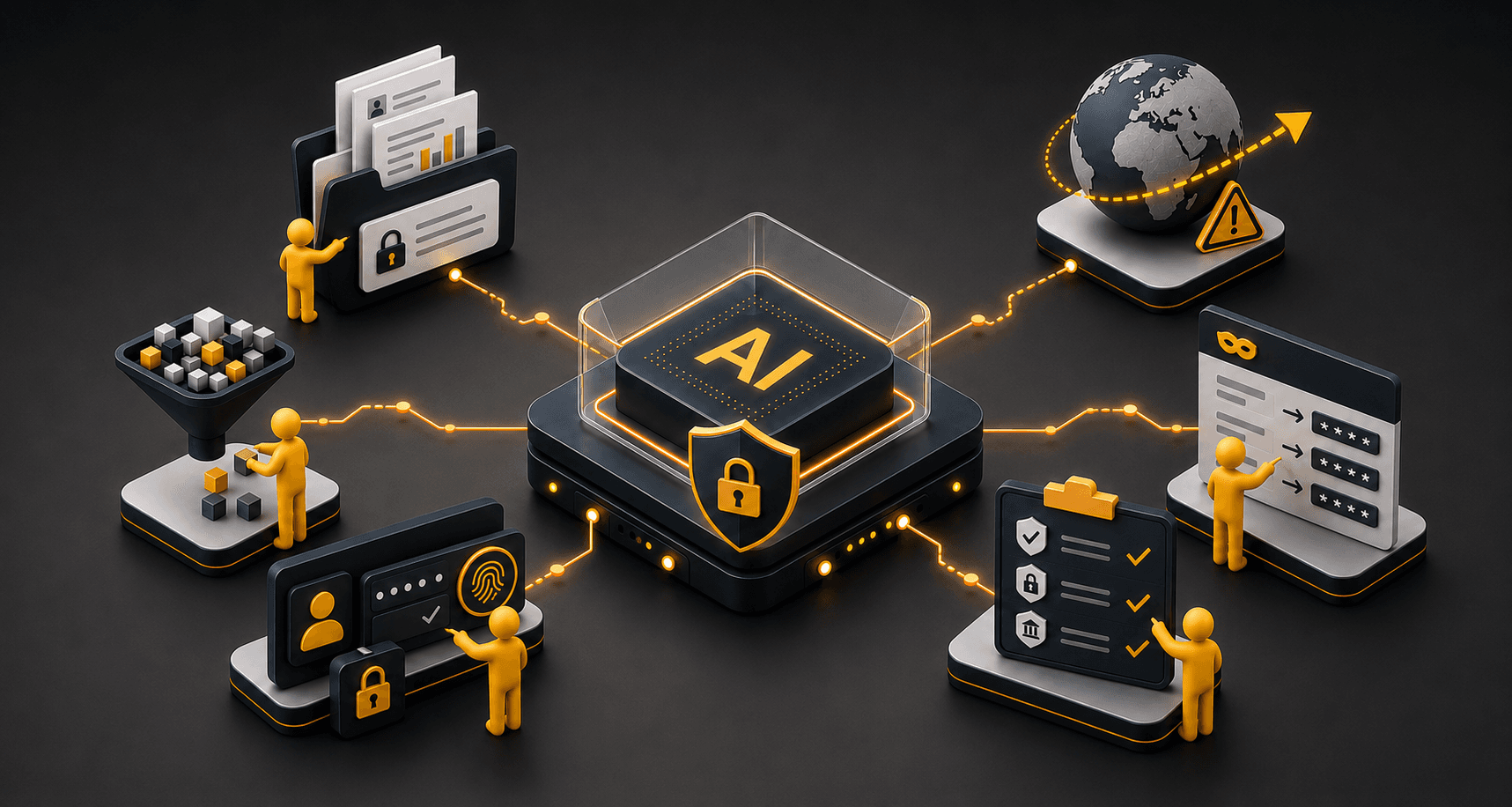
The key is to move AI and automation use out of the realm of individual choice and into corporate governance. That means clearly defining which tools may be used, which data may be transferred to these systems, who may access them with which permissions and how these processes will be monitored. Otherwise, scattered use that starts in good faith grows over time into a shadow of technology that is hard to control.
Governance Area | What the Organization Must Do |
|---|---|
Clear usage policies | Define clearly which AI tools are approved and which scenarios count as risky. |
Data classification | Define separate, AI-specific rules for sensitive, personal, financial and strategic data. |
Access and permission management | Keep control over which systems automation tools can access, and to what extent. |
Monitoring and auditing | Make visible which application is deployed where, which data it touches and how it is used. |
Employee awareness | A large part of the risk comes from a lack of knowledge; training plays a role as critical as technical measures. |
Offering an approved alternative | When enterprise solutions do not meet the speed and flexibility employees need, shadow use becomes unavoidable. |
Shadow AI Governance Checklist: Synchron Bilişim Analysis (2026)
In fact, the issue is not only security but also sustainability. An organization where everyone builds their own automations, their own AI workflows and their own data usage model may look efficient in the short term but becomes unmanageable in the long term. With the right governance model, however, organizations can support innovation and move forward without compromising security.
In short, the most effective approach to Shadow AI is not pressure but visibility, policy and controlled freedom. When organizations understand their employees' needs and build secure frameworks around them, AI stops being a risk and becomes a real tool for transformation.
The Synchron Bilişim approach: Secure and controlled AI and cloud transformation
The way to eliminate Shadow AI risk is not to stop technology but to manage it within the right framework. At Synchron Bilişim, we develop infrastructure and strategies that help organizations use AI and cloud technologies in a secure, controlled and governance-focused way.
This approach is built on three critical needs:
- Visibility:
Knowing which tools and automations are used within the organization - Control:
Managing data, access and integration processes based on policy - Security:
Keeping corporate risk to a minimum while delivering efficiency
The goal is not to slow innovation but to make it sustainable. With the right policies, the right architecture and the right security layers, AI solutions become a source of real value for organizations rather than a threat.
To manage your AI and cloud transformation securely, get to knowSynchron Bilişim's expertise.
About the author
Synchron